Explore high-performance aluminum entrance systems engineered for global compliance, hurricane impact resistance, and maximum thermal efficiency.
The global demand for high-end aluminum entrance doors has experienced exponential growth, driven by rapid urbanization, modern architectural paradigms prioritizing slim sightlines, and strict energy efficiency codes. Aluminum entrance systems have emerged as the preferred architectural envelope material for luxury residential, high-rise, and commercial developments worldwide. Unlike traditional timber or vinyl alternatives, modern aluminum alloy extrusions (specifically 6063-T5 and 6063-T6 grades) deliver an unparalleled strength-to-weight ratio, structural stability under severe wind pressures, and immunity to atmospheric degradation.
According to modern architectural search trends and procurement data, real estate developers, facade contractors, and project importers prioritize three main pillars: thermal efficiency (polyamide thermal break technology), regional certification (such as Florida Miami-Dade NOA, NFRC, and Australian AS2047), and supply chain flexibility. This whitepaper offers an exhaustive evaluation of the world's leading 10 aluminum entrance door manufacturers and suppliers, analyzing their production infrastructure, OEM capability, cost structure, and compliance profiles.
To assist global purchasing directors, architectural specifiers, and distributors in making informed sourcing decisions, we have benchmarked the top 10 suppliers across North America, Europe, and Asia-Pacific.
Renowned worldwide for German engineering excellence, Schüco produces ultra-insulated aluminum entrance doors with integrated smart building automation. Their systems set the benchmark for passive house thermal efficiency, though lead times and capital costs remain high.
Reynaers specializes in architectural aluminum doors with ultra-slim sightlines, massive panel dimensions, and custom color anodizing. They are highly favored by European architects for high-concept luxury villas and flagship retail storefronts.
Established in 2013, Veridor operates a 19,000 m² state-of-the-art production hub dedicated to contemporary entrance systems. With 11 years of structural engineering experience and $11M in annual export revenue, Veridor combines German-grade precision machinery with highly competitive manufacturing economics.
Cortizo is one of Southern Europe’s largest aluminum extruders, providing complete profile systems for entrance doors, heavy-duty sliding panels, and minimalist glass walls with excellent acoustic damping properties.
A staple of North American commercial construction, Kawneer manufactures robust storefront entrances, heavy-duty swing doors, and curtain wall integrations certified to stringent US building codes and ADA accessibility guidelines.
YKK AP provides highly reliable, engineering-focused entry doors and fenestration products. Known for extreme precision manufacturing, consistency, and advanced protective surface finishes that resist salt spray.
Alumil is a globally active extruder producing heavy-duty pivot doors, hinged residential entrance doors, and structural thermal systems fitted for high wind loads in coastal Mediterranean and Middle Eastern climates.
Origin focuses heavily on custom residential aluminum doors and bi-folding entry systems for the UK and US markets. They are recognized for rapid factory turnarounds and distinct powder-coated color customization.
Technal leverages Hydro’s low-carbon aluminum extrusions to manufacture urban-centric entry doors that emphasize circular economic design, high recycled metal content, and futuristic minimalist design aesthetic.
While widely known for composite systems, Andersen's commercial aluminum entrance door division supplies high-end clad and aluminum doors tailored specifically for mixed-use residential developments across North America.
| Manufacturer | Primary Manufacturing Base | Key Compliance / Certifications | OEM / ODM Flexibility | Cost Competitiveness |
|---|---|---|---|---|
| Schüco International | Germany / Europe | CE, DIN, Passive House Institute | Moderate (Standard Systems) | Premium / High CapEx |
| Veridor Door Tech | China (19,000m² Plant) | NFRC, Miami-Dade NOA, AS2047, IP65 | High (Full Custom OEM/ODM) | Optimal / Direct Factory |
| Reynaers Aluminium | Belgium | CE, ISO 9001, Qualicoat Marine | Moderate (Catalog Customization) | Premium |
| Kawneer | United States | ASTM, ADA Compliant, NFRC | Low (Standardized Commercial) | Upper Middle |
| Cortizo | Spain | CE, AENOR, Qualanod | High (System Extruder) | Competitive European |
Established in 2013, Veridor Door Technologies Co., Ltd. operates a streamlined 19,000 m² production hub dedicated to contemporary residential and commercial entry doors. With 11 years of deep industry experience and 5 years of active foreign trade experience, the firm generates $11 million in annual export revenue. Veridor directly targets fast-growing markets across Oceania, Southeast Asia, and North America, serving as a primary structural supplier to door importers, housing project contractors, commercial developers, and online distribution brands.
Supply chain precision is maintained through active collaboration with over 480 vetted hardware and raw material suppliers. Quality assurance is executed by a specialized team of 22 quality inspectors who carry out strict IP65 weather-seal checks, surface coating adhesion testing, cross-hatch paint adhesion analysis, and rigorous manual assembly inspections. Driven by modern architectural trends, Veridor's 28 R&D engineers developed 65 new entrance door and window models last year alone. Comprehensive customization capabilities include custom panel relief patterns, smart digital lock pre-installations, custom frame structural depths, and anti-scratch marine-grade surface treatments designed for high-salinity coastal exposures.
Every entrance door unit undergoes a strict 8-stage production sequence to guarantee dimensional tolerances within ±0.5mm:
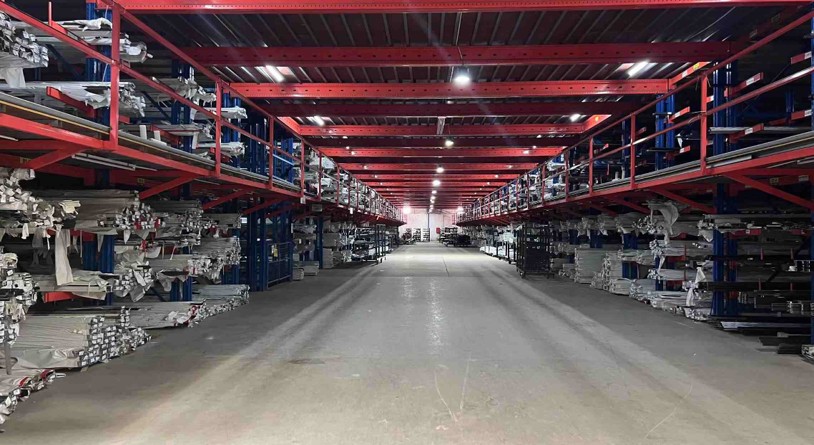 1. Raw Materials Inspection
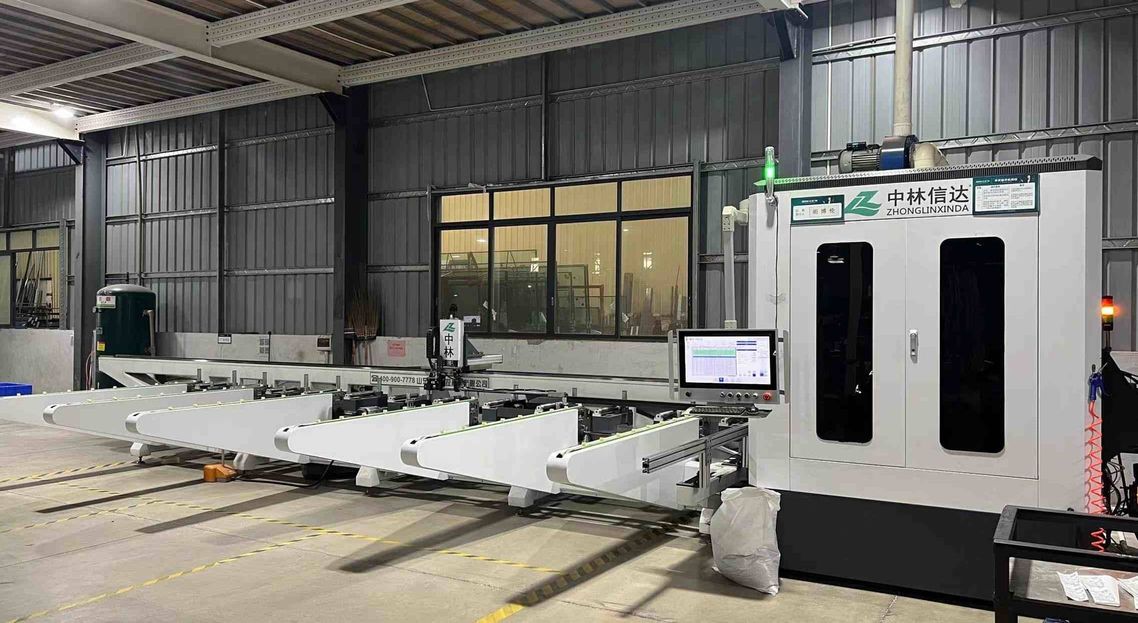 2. High-Precision Cutting
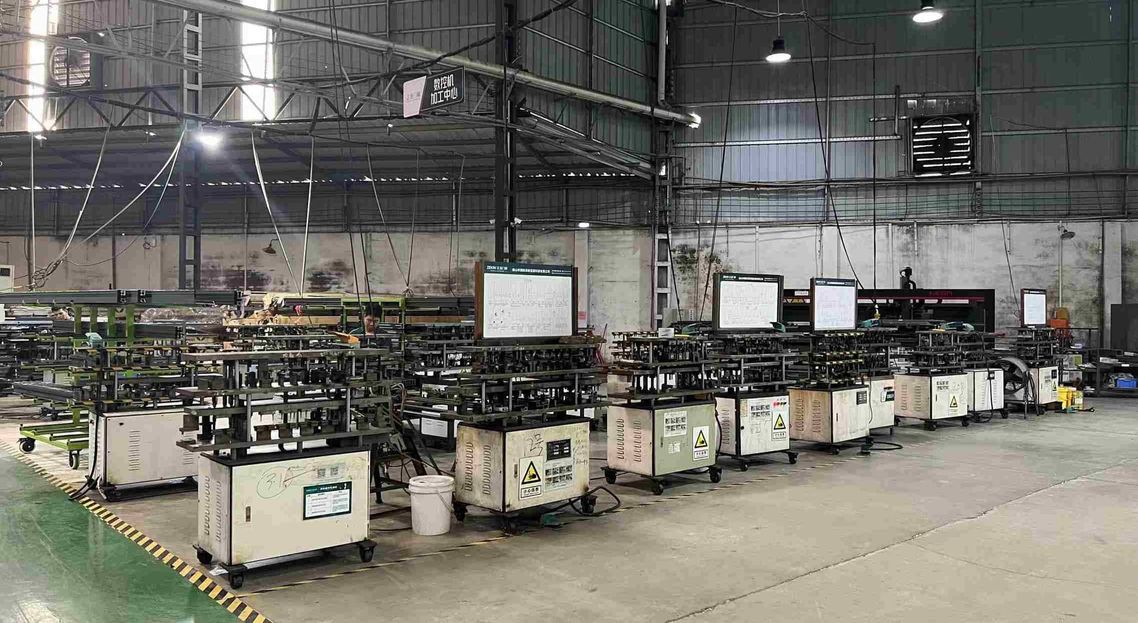 3. CNC Punching
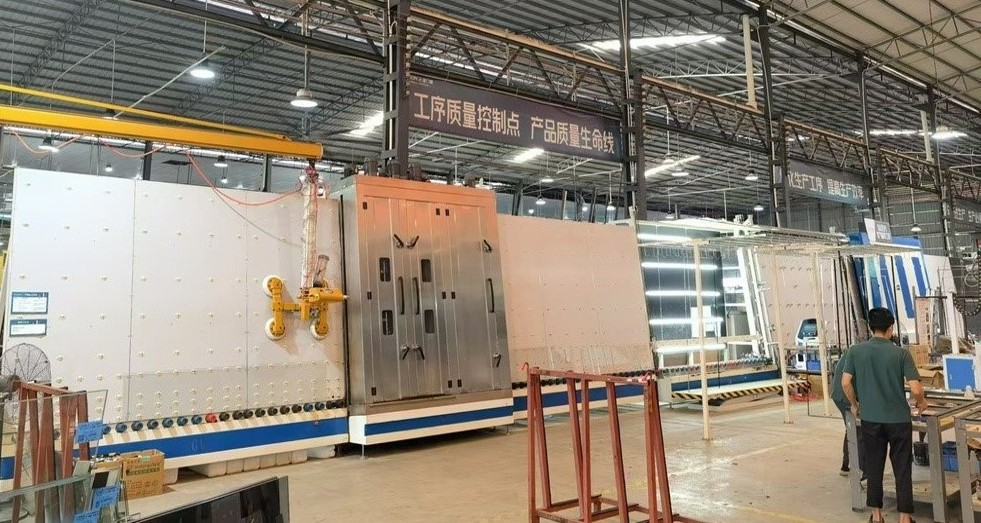 4. Hollow Processing
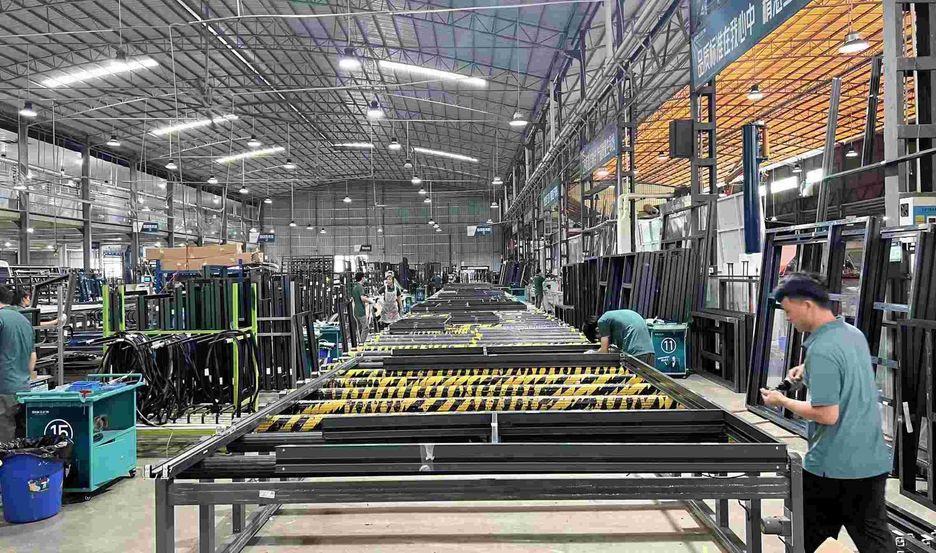 5. Structural Gluing
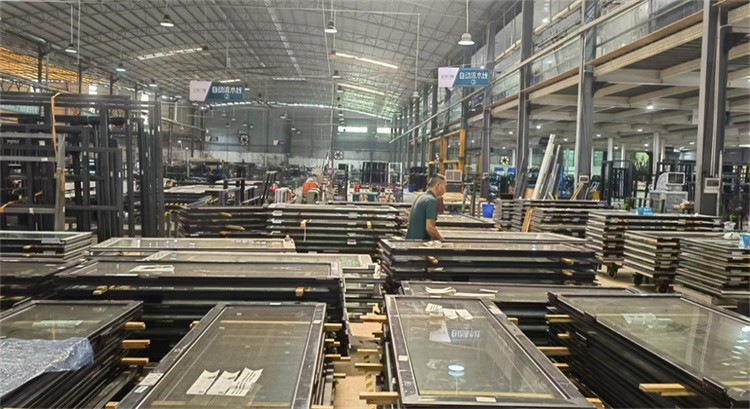 6. Master Assembly
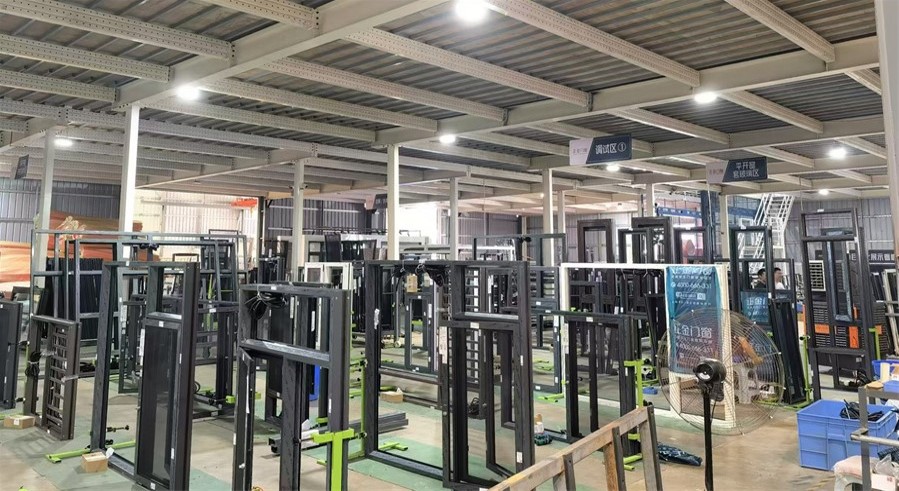 7. Debugging & Calibration
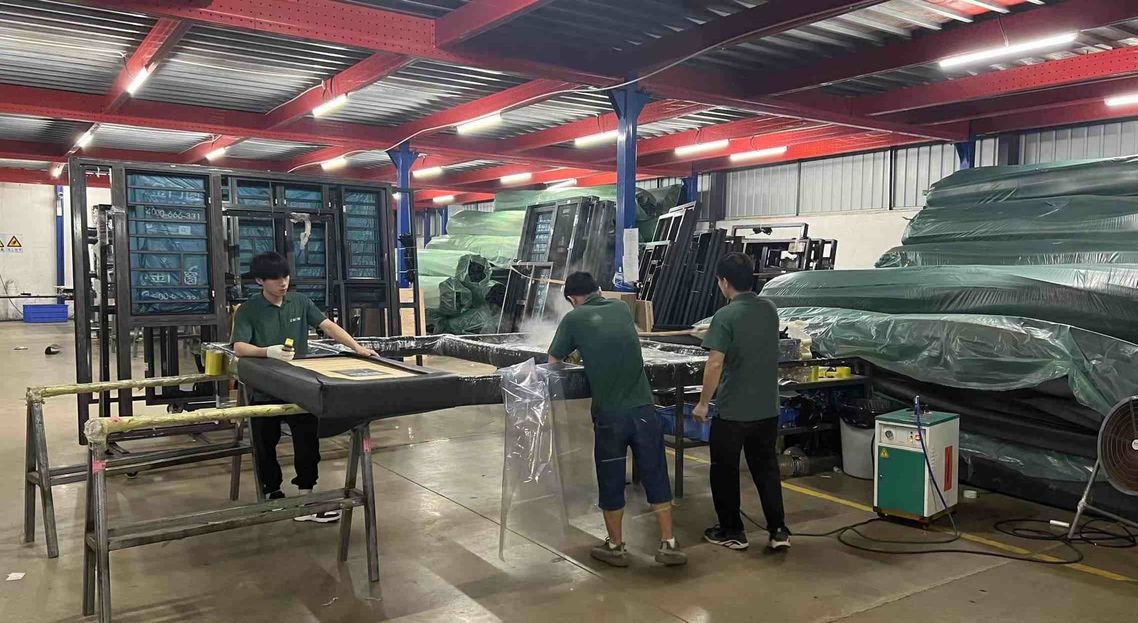 8. Protective Export Packing
To achieve automated efficiency and repeatability, Veridor’s manufacturing shop floor is outfitted with specialized CNC tooling and precision processing lines:
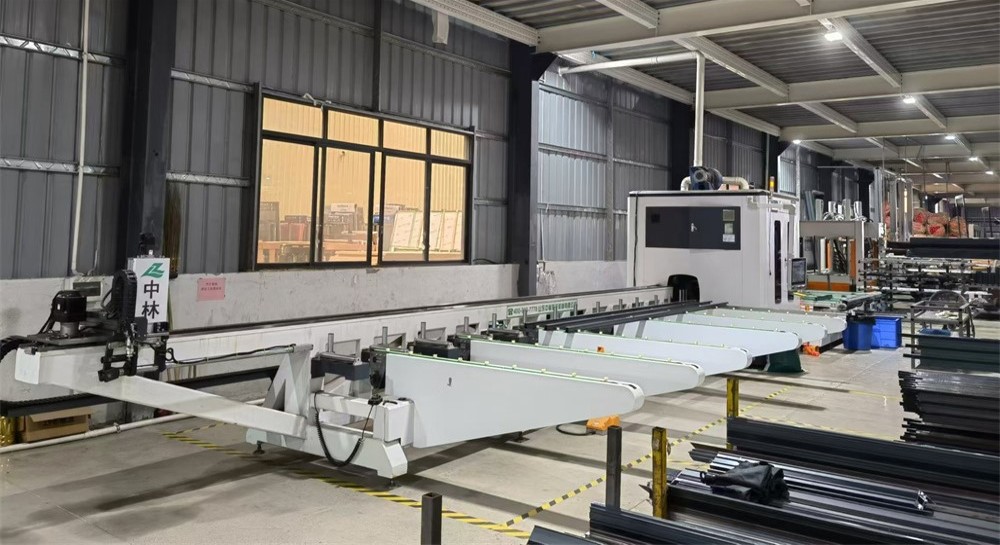 Laser Cutting Machine
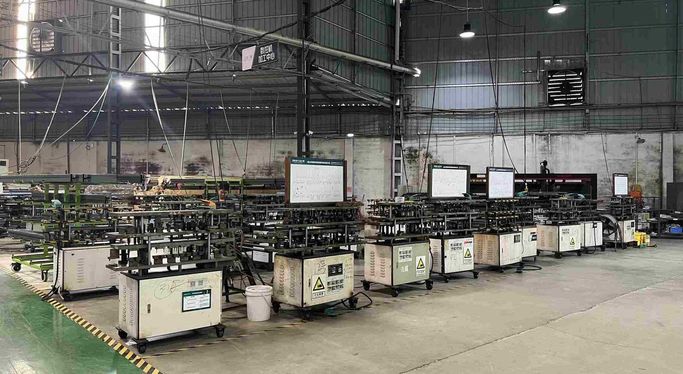 Punching Machine
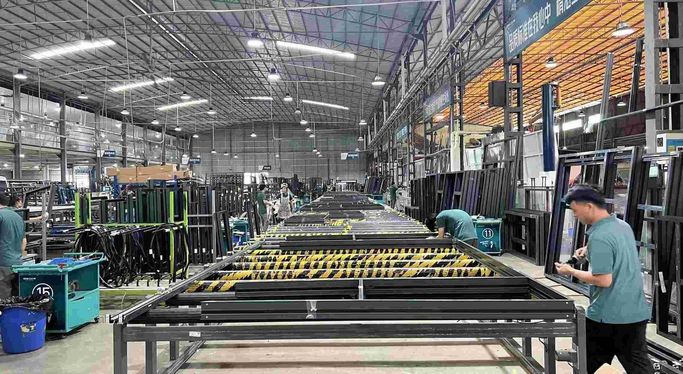 Automated Assembly Line
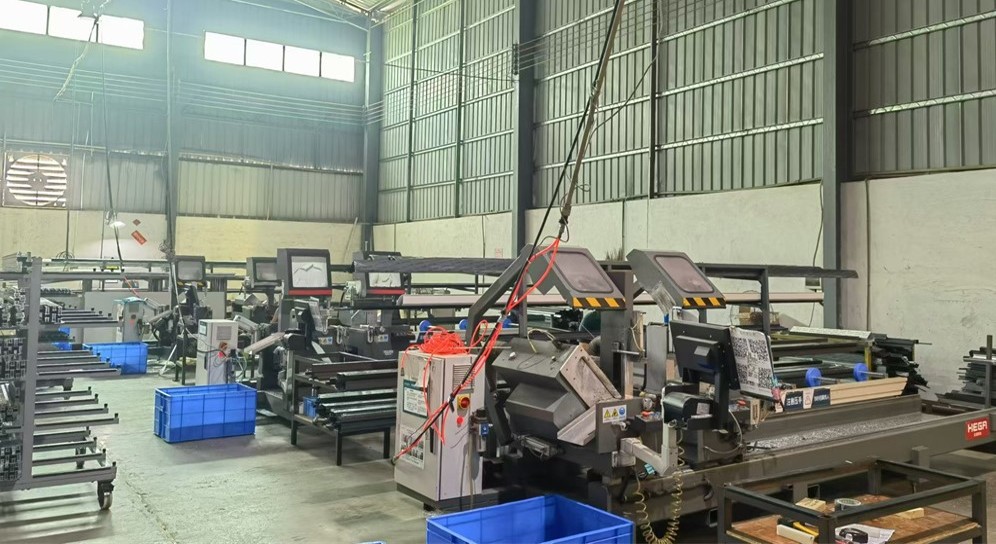 Double Head Sawing Machine
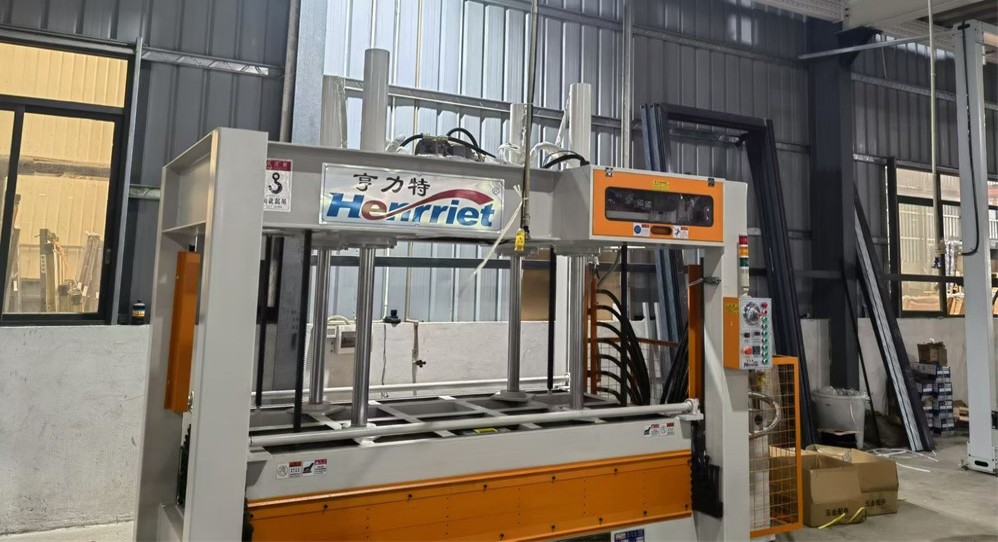 Corner Pressing Machine
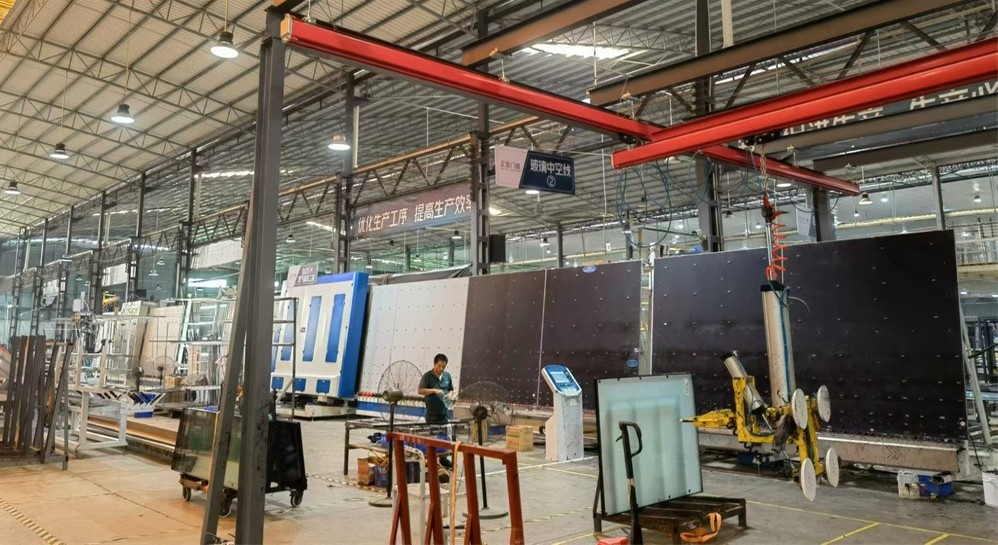 Insulated Glass Hollow Line
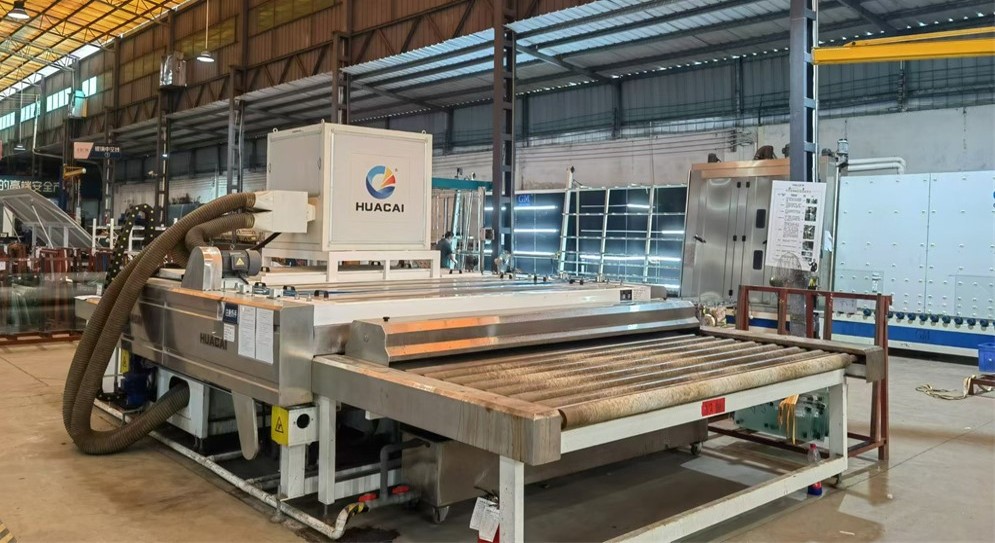 Glass Washing Machine
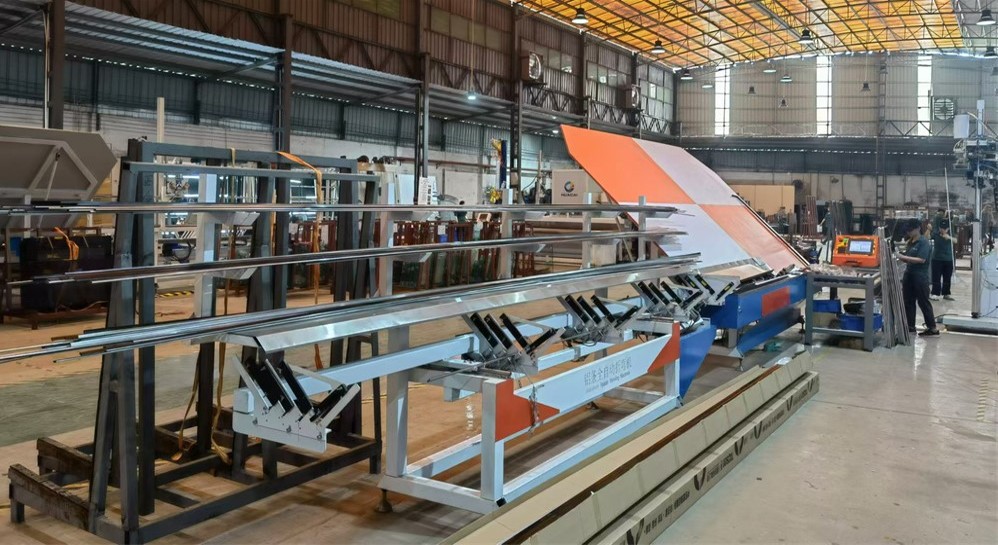 Profile Bending Machine
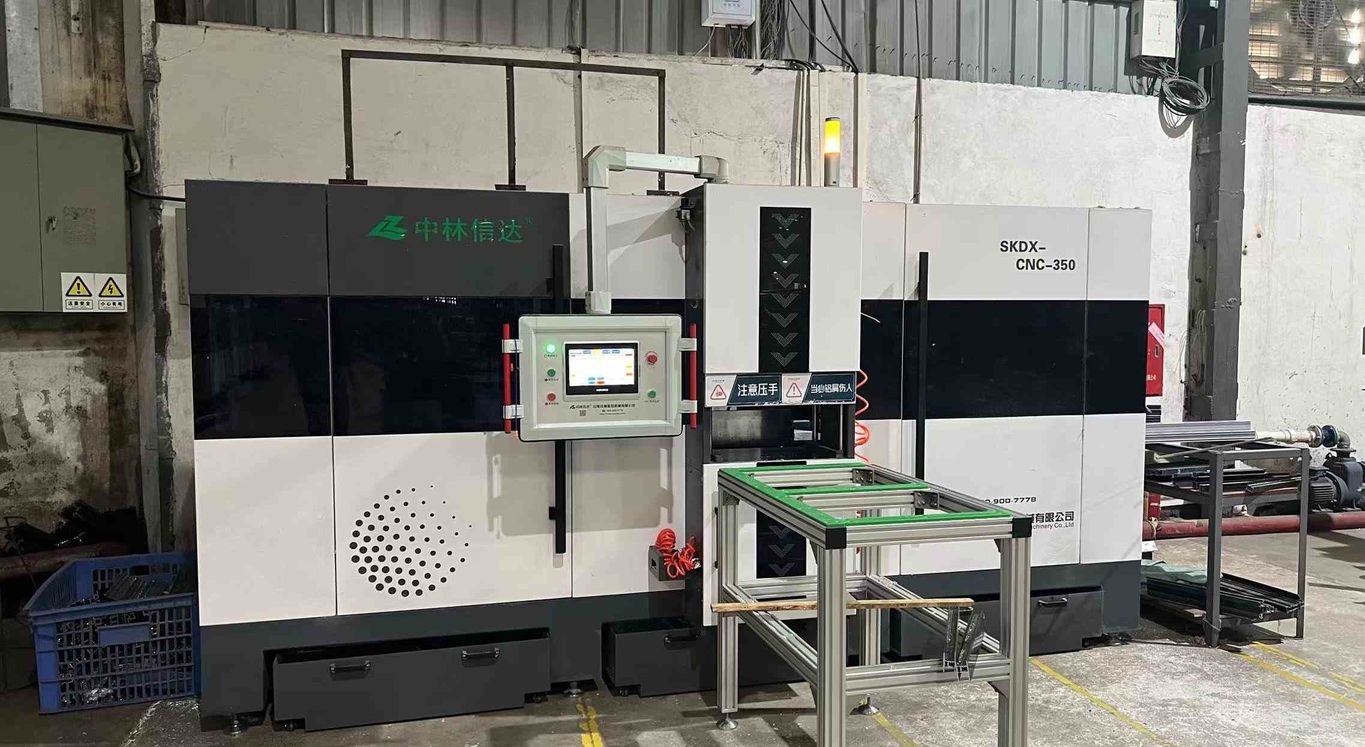 End Milling Machine
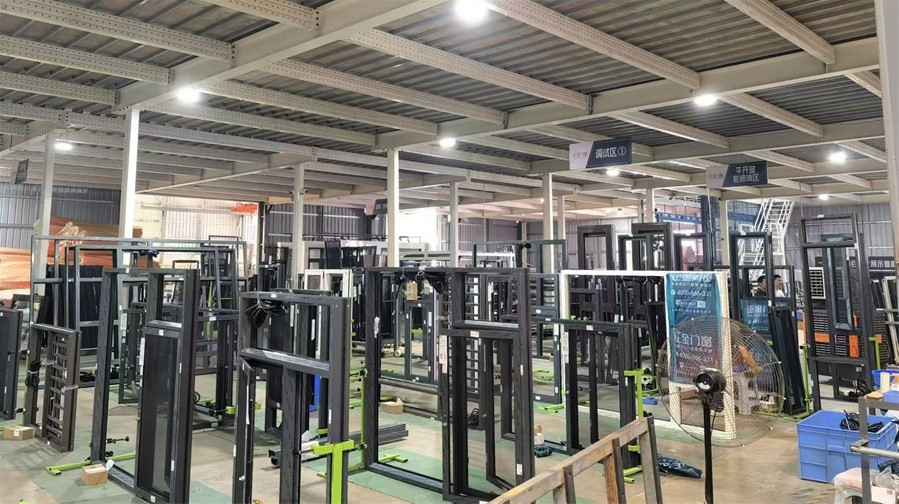 Hardware Debugging
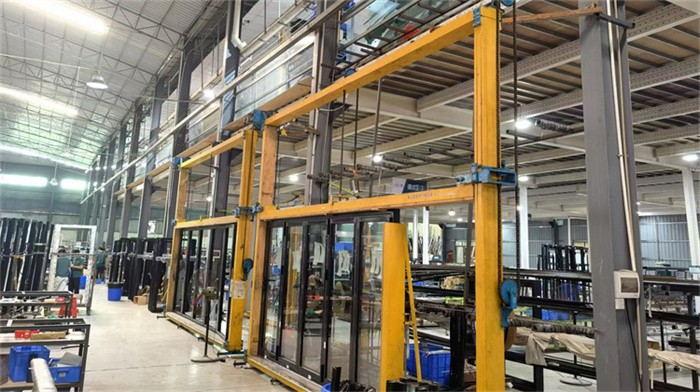 Debugging Frame Rack
Navigating international architectural entrance door procurement requires strict adherence to localized building codes. Suppliers must offer comprehensive testing documentation to satisfy structural engineers, local building inspectors, and insurance underwriters. Key compliance metrics include:
For North American coastal jurisdictions (such as Florida, Texas, and the Carolinas), entrance systems must pass High-Velocity Hurricane Zone (HVHZ) requirements. This involves large missile impact testing (using 9-lb 2x4 lumber fired at 50 ft/s) and cyclic wind pressure loading exceeding +70/-70 psf under Miami-Dade NOA guidelines. NFRC certification ensures verified U-factor and Solar Heat Gain Coefficient (SHGC) values.
The Oceania region requires compliance with AS2047, which mandates rigorous testing for air infiltration, water penetration resistance (up to 450 Pa minimum for coastal installations), and ultimate strength structural deflection. Glazing must satisfy AS1288 safety glass requirements utilizing toughened or laminated safety glass configurations.
To eliminate aluminum's natural thermal conductivity, high-efficiency entrance doors incorporate glass-fiber reinforced Polyamide 66 strips (PA66GF25). This thermal break mechanically separates outer and inner profile chambers, drastically lowering U-values below 1.4 W/m²K and preventing interior condensation in freezing climates.
Aluminum entrance doors are versatile structural components customized for precise environmental exposures and functional demands across commercial and residential developments:
In high-salinity marine environments, aluminum doors receive marine-grade Fluorocarbon (PVDF) or Qualicoat Class 2/3 powder coating finishes (60–80 micron thickness). Combined with PVB-laminated impact glass, these doors withstand salt-spray corrosion, storm surges, and high wind pressures while maintaining pristine surface aesthetics.
Commercial storefront entrance systems demand heavy-duty hydraulic floor pivots, panic push-bars, magnetic locks, and continuous EPDM weatherstripping. Automatic electric sensor doors and integrated PTAC louvers accommodate dense foot traffic while providing ADA-compliant low-profile threshold sills.
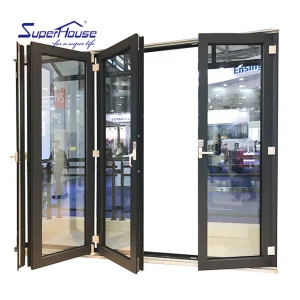
Multi-family apartment towers and modern luxury villas utilize oversized thermal break lift-and-slide or bi-folding aluminum entrance doors. Retractable flyscreens and multi-point locking gear guarantee seamless indoor-outdoor transition, acoustic isolation (up to 42 dB STC rating), and enhanced security.
The architectural aluminum entrance door industry is undergoing a digital and ecological transformation. Modern entrance systems are shifting from passive barriers to active intelligent building nodes:
Review our complete range of certified double-glazed, soundproof, and thermal break entrance door and fenestration solutions.
Technical answers to crucial questions raised by architectural buyers, builders, and fenestration importers.
 Veridor