Explore our certified commercial entrance systems engineered for high traffic, energy efficiency, structural durability, and seamless sensor-driven access automation.
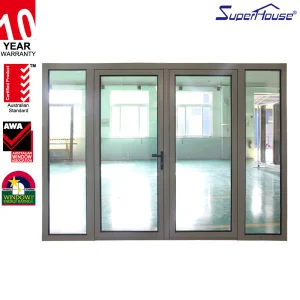
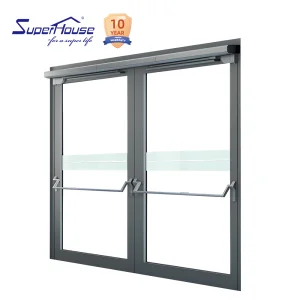
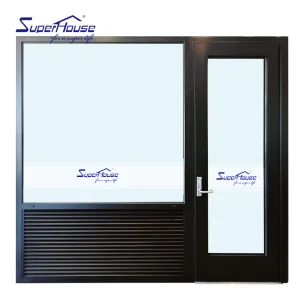
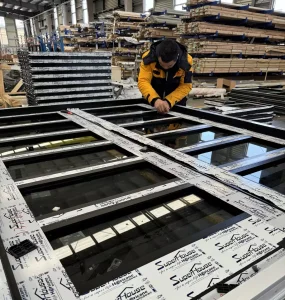
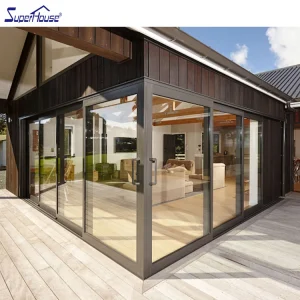
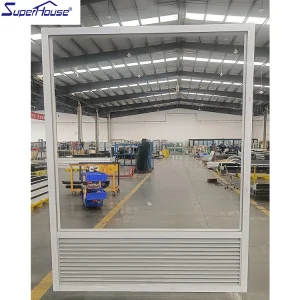
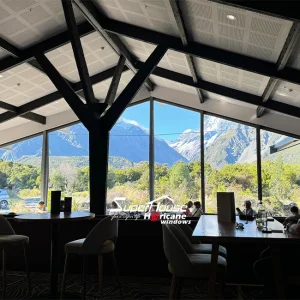
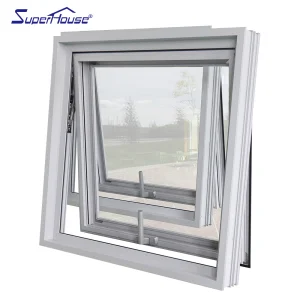
The global entrance automation sector is undergoing a profound structural shift. Modern commercial buildings, healthcare hubs, retail centers, and high-end residential complexes no longer view doors as passive physical barriers. Instead, they are evaluated as integrated cyber-physical nodes that directly dictate building energy performance, occupant flow velocity, hygiene compliance, structural resilience, and architectural aesthetic identity.
Central to this revolution are aluminum doors and automatic sensor door manufacturers & factories. By combining high-tensile 6063-T6 aluminum extrusion alloys with multi-frequency radar, active infrared presence sensors, edge AI optics, and thermal-break Polyamide barrier engineering, specialized manufacturers deliver entry solutions capable of handling millions of operational cycles under demanding climate conditions.
The foundational strength of any premium automatic sensor door lies in its structural profile engineering. Aluminum alloy 6063-T6 serves as the global standard for architectural doors due to its exceptional strength-to-weight ratio, superior corrosion resistance, and flawless surface extrudability for precision mechanical joinery.
Utilizing high-grade 6063-T6 aluminum, profile walls feature wall thicknesses ranging from 2.0mm to 3.0mm in heavy commercial load zones, preventing structural deflection under sustained wind loads up to 5000 Pa (equivalent to Category 5 hurricanes).
To combat thermal bridging in modern glass facades, advanced aluminum automatic doors integrate 24mm to 34mm Polyamide (PA66 reinforced with 25% glass fiber) thermal break strips. This reduces profile U-values to under 1.6 W/m²K, satisfying Energy Star and NFRC insulation standards.
Exposed aluminum profiles undergo Qualicoat-certified PVDF (Polyvinylidene Fluoride) powder coating or anodization up to 25 microns. This marine-grade finish guarantees high resistance to salt spray, UV degradation, chalking, and abrasive chemical cleaner exposures.
| Structural Parameter | Standard Automatic Entrance | Veridor Engineered Commercial System | Industry Performance Standard |
|---|---|---|---|
| Aluminum Alloy Grade | 6063-T5 (Standard Extrusion) | 6063-T6 (Precision Tempered) | ASTM B221 / EN 755-2 |
| Thermal Break Material | PVC / Low-density Nylon | PA66GF25 Glass Fiber Reinforced | DIN 16941 / ISO 16396 |
| Wind Pressure Resistance | 1500 - 2500 Pa | Up to 5000 Pa (HVHZ Miami-Dade) | ASTM E330 / TAS 202 |
| Ingress Protection (Drive Units) | IP42 / IP54 | IP65 Weather-Sealed Header Drive | IEC 60529 |
| Operational Life Cycle | 500,000 Cycles | 2,000,000+ Continuous Cycles | EN 16005 / UL 325 |
The automatic sensor door relies on a harmonized matrix of motion detection, static presence monitoring, anti-pinch infrared light curtains, and intelligent brushless motor controller units. Selecting the appropriate sensing topology is critical for optimizing user safety and preventing air-conditioning envelope leakage.
Monitors kinetic motion vectors using high-frequency radio waves. Ideal for detecting approaching pedestrian speed up to 5 meters away, triggering rapid header activation while ignoring cross-traffic along building facades.
Projects dense matrices of infrared spots near the threshold. If a stationary object or person interrupts a spot, the controller keeps the door leaf open, ensuring 100% anti-pinch safety under EN 16005 compliance.
Calculates photon round-trip travel times to build real-time spatial point clouds. Distinguishes humans from shopping carts, wheelchairs, and pets, eliminating false triggers and saving building energy.
Integrates micro-optical sensors running local deep-learning inference. Provides contactless biometric clearance in 0.2 seconds for executive suites, laboratories, and high-security cleanroom entries.
The mechanical heart of modern automatic sliding and swing doors is a low-noise, high-torque Brushless DC (BLDC) motor coupled with an optical encoder and 32-bit microprocessor controller. The system features:
Exporting specialized aluminum doors requires strict adherence to international building codes, structural wind resistance certifications, and pedestrian safety directives across key global regions.
Requires mandatory NFRC (National Fenestration Rating Council) thermal performance certifications, UL 325 safety standards for door operators, and Miami-Dade NOA (Notice of Acceptance) for High-Velocity Hurricane Zones (HVHZ). ADA (Americans with Disabilities Act) compliance demands minimum clear opening widths of 32 inches and low push-force thresholds.
Governed by EN 16005 (Power-operated pedestrian doorsets - Safety in use). Mandates dynamic anti-pinch protection sensors, dual-circuit emergency breakaway systems for escape routes, CE marking under the CPR (Construction Products Regulation), and tight building air-tightness ratings (EN 12207).
Demands compliance with AS2047 / AS1288 in Australia and New Zealand, emphasizing structural deflection, water penetration resistance under tropical storms (up to 700 Pa), and anodized marine-grade anti-corrosion finishes for coastal installations.
China's structural aluminum manufacturing ecosystems offer unmatched industrial cluster advantages. Veridor Door Technologies leverages raw material proximity, advanced CNC machinery, and standardized quality management workflows to deliver custom OEM/ODM entrance systems with optimized lead times and competitive total-cost-of-ownership (TCO).
Below is the standardized 8-step fabrication sequence executed within Veridor's 19,000 m² smart plant:
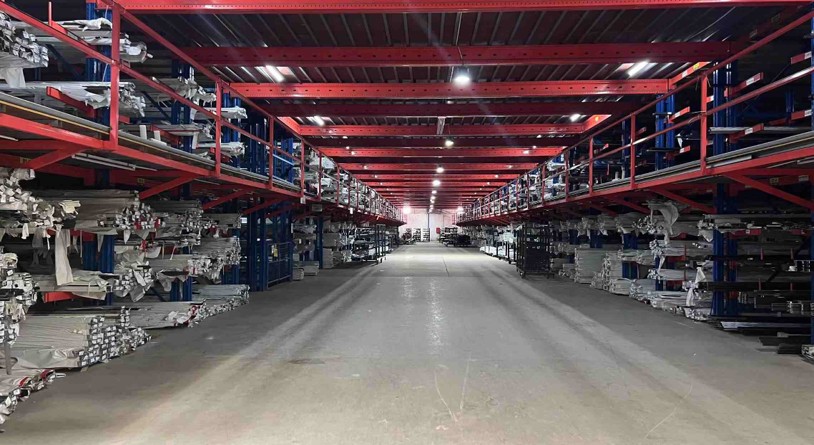 1. Raw Materials Inspection
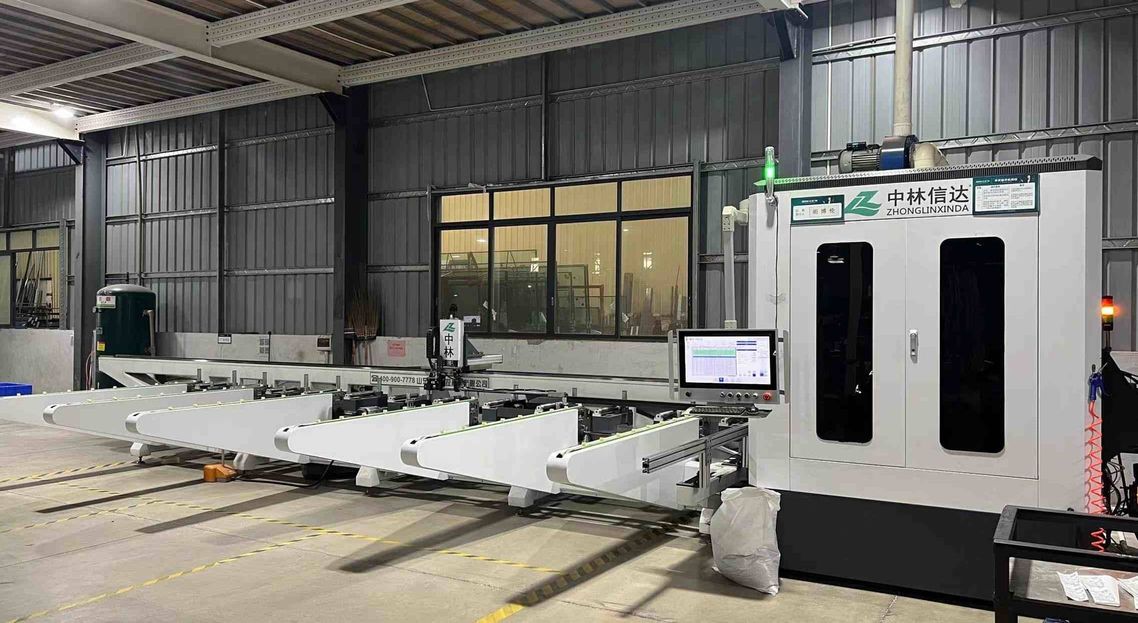 2. Precision Profile Cutting
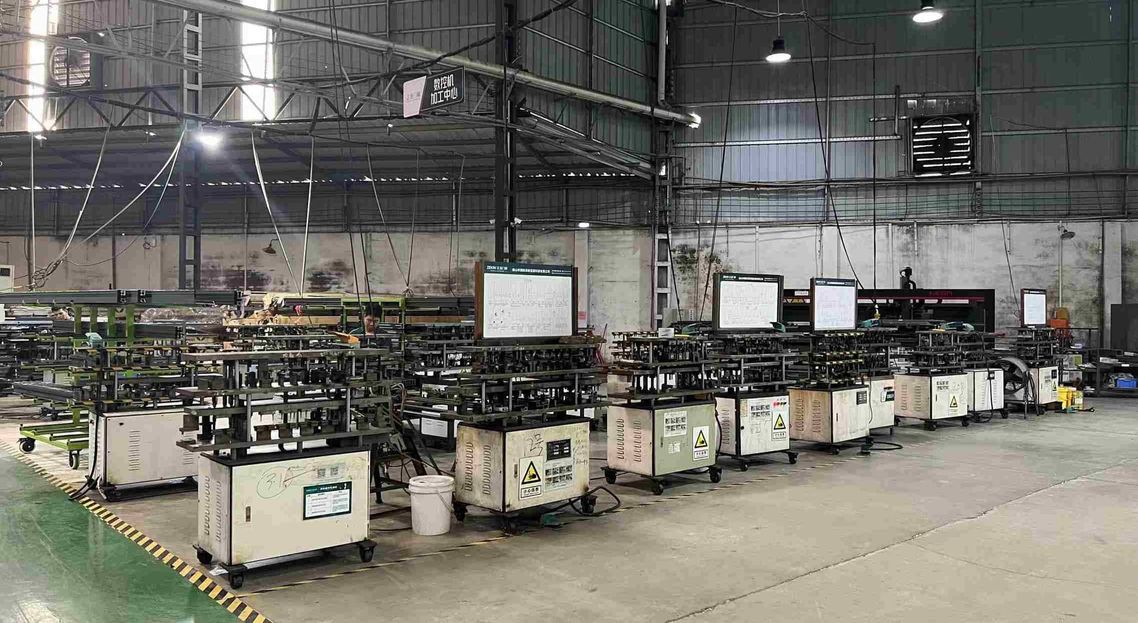 3. CNC Hardware Punching
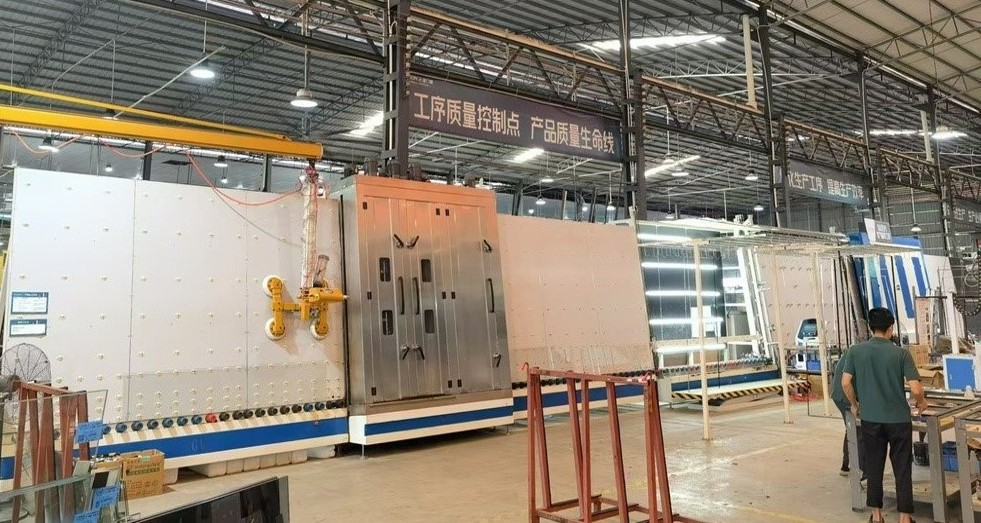 4. Hollow Glass Processing
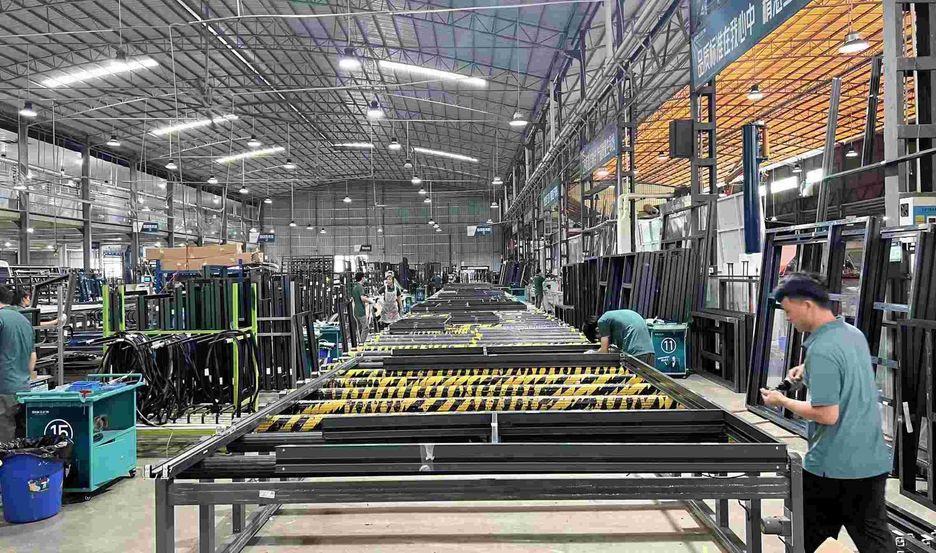 5. Structural Gluing
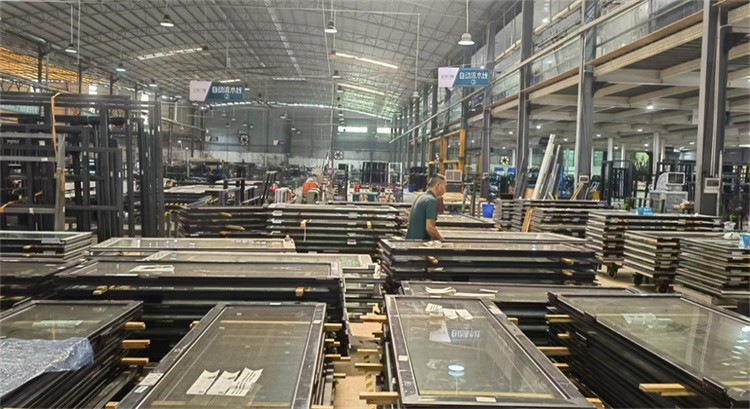 6. Frame Assembly
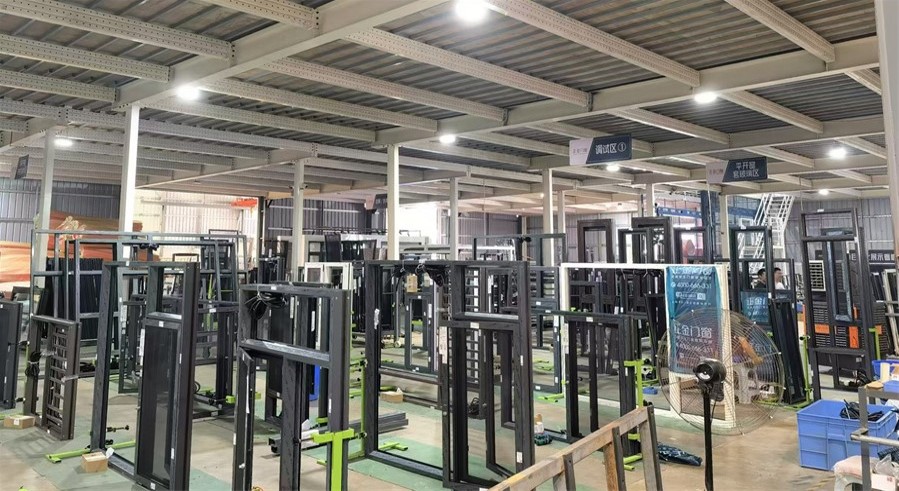 7. Sensor & Drive Debugging
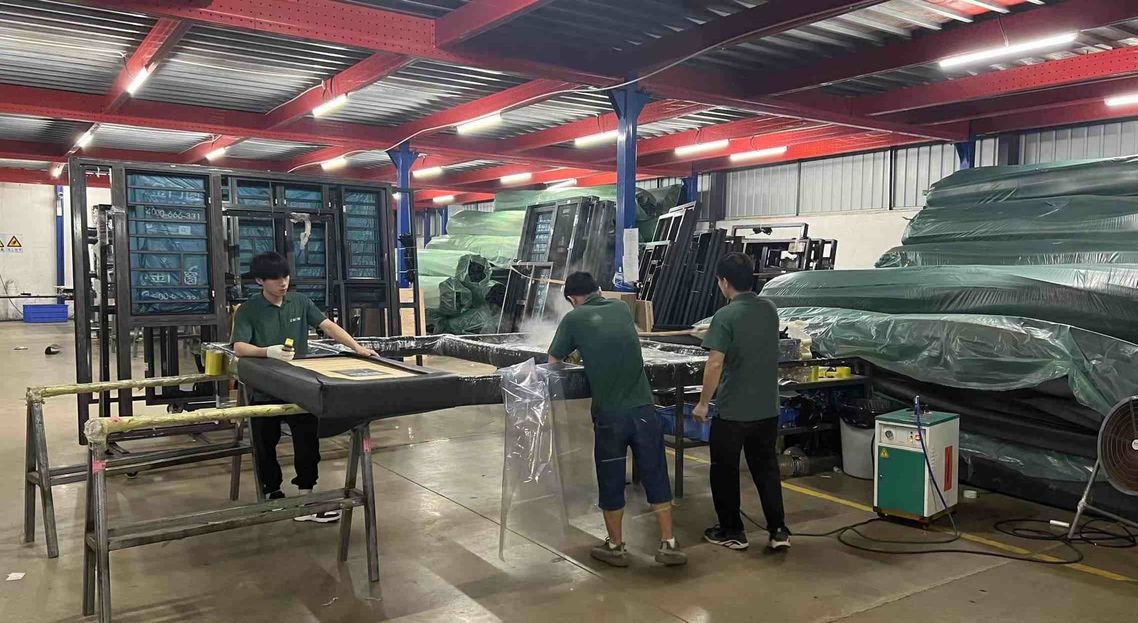 8. Export Protective Packing
Precision door geometry requires tight manufacturing tolerances (+/- 0.5mm). Veridor utilizes high-precision automated tooling throughout the plant floor:
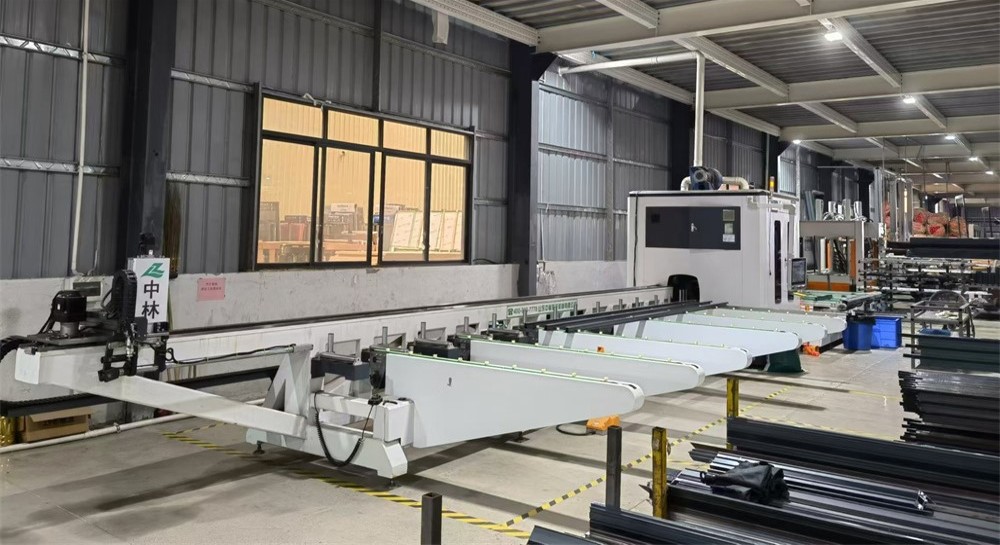 Fiber Laser Cutting Machine
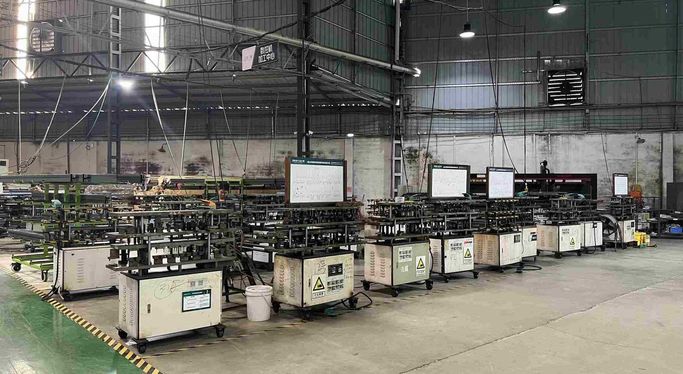 Multi-Station Punching Unit
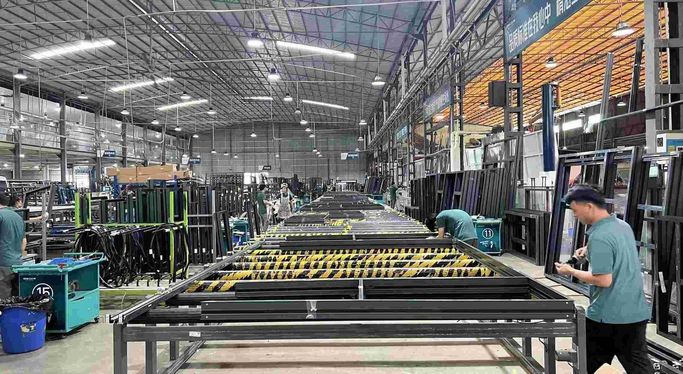 Automated Main Assembly Line
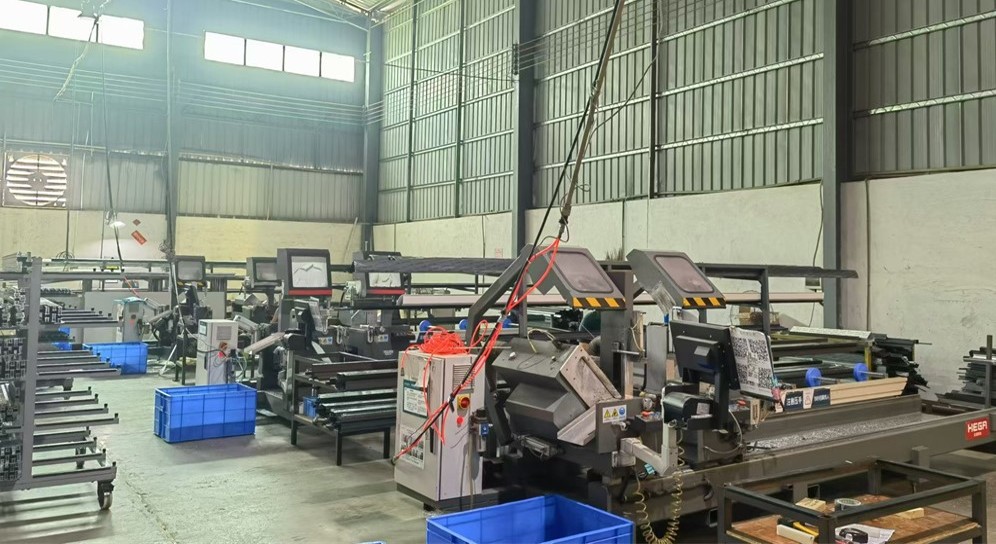 Double Head Mitre Sawing Unit
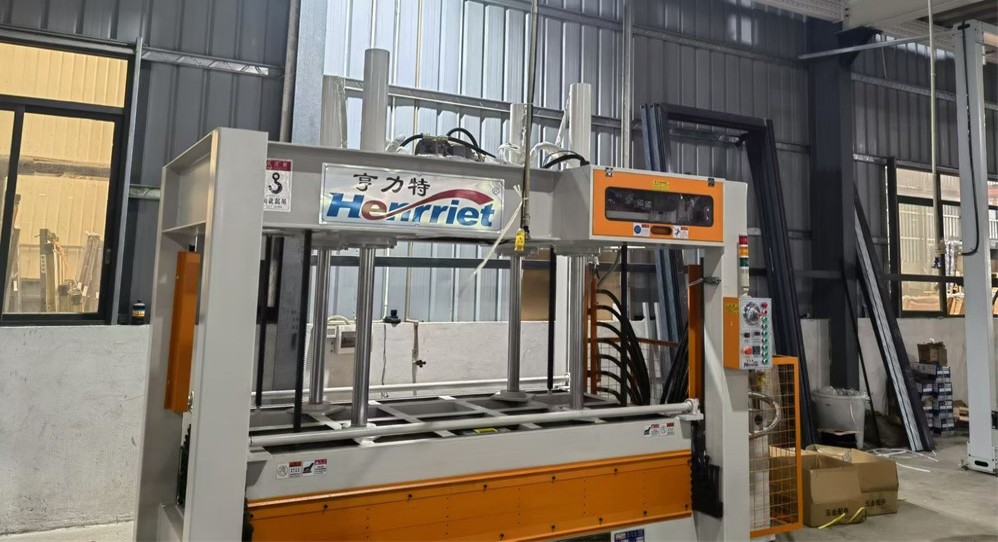 Corner Crimping Press Machine
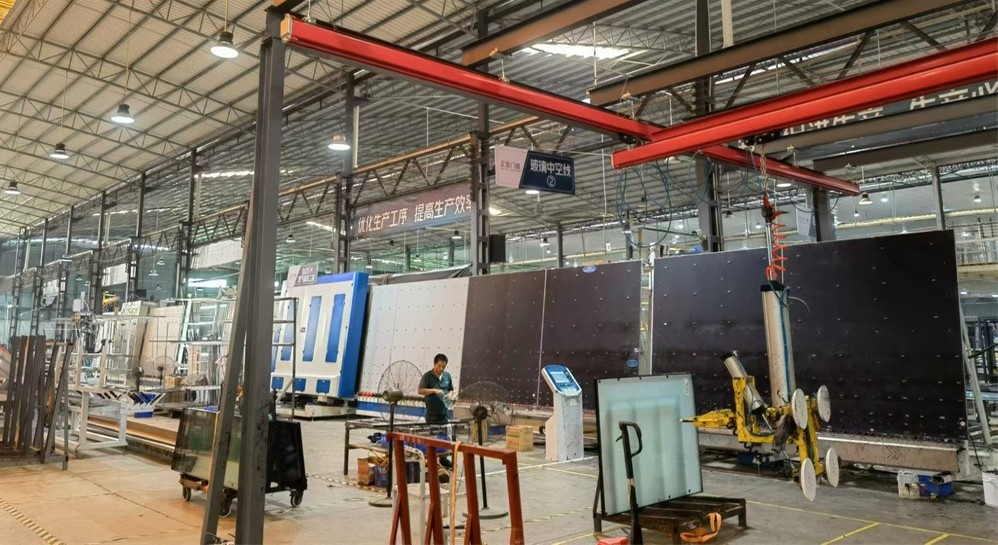 Insulated Glass Hollow Line
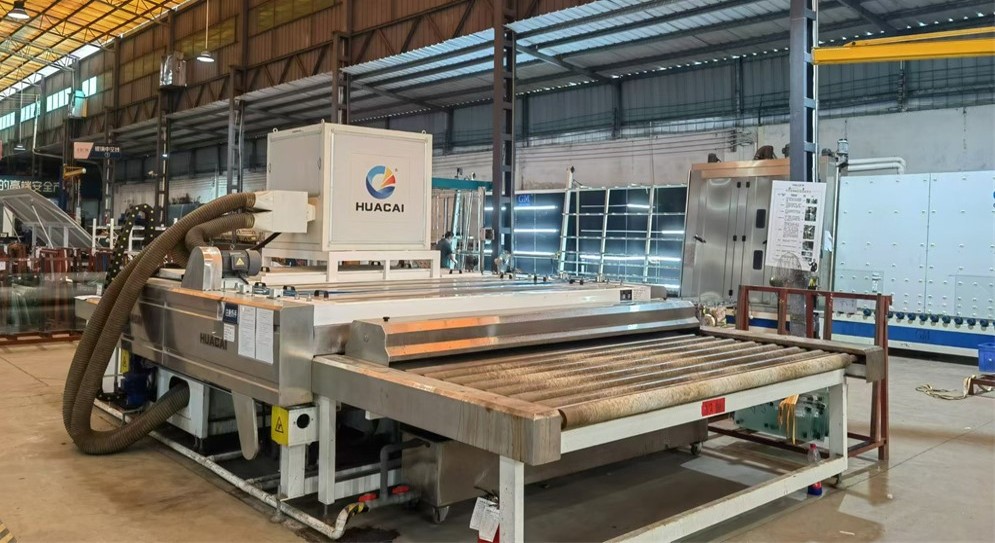 Automated Glass Cleaning Unit
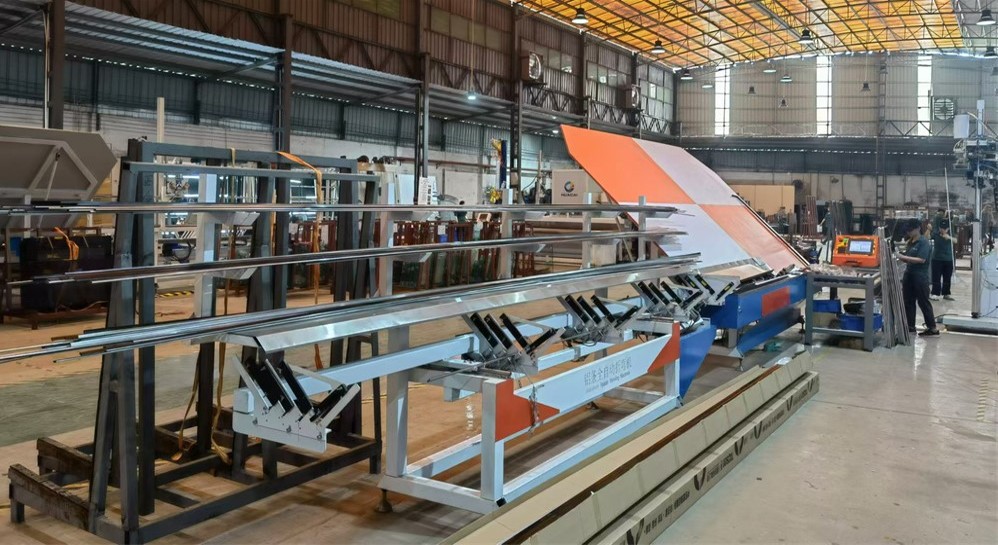 CNC Profile Bending Machine
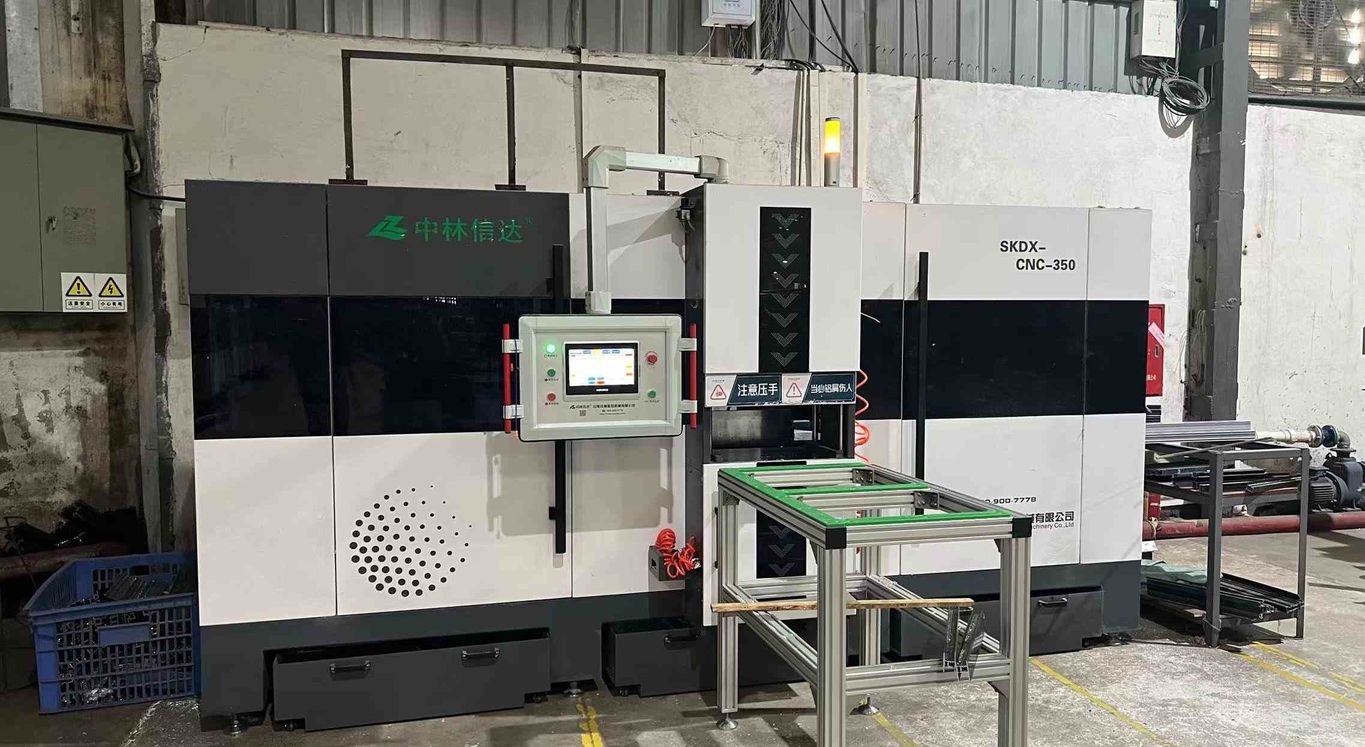 Automatic End Milling Machine
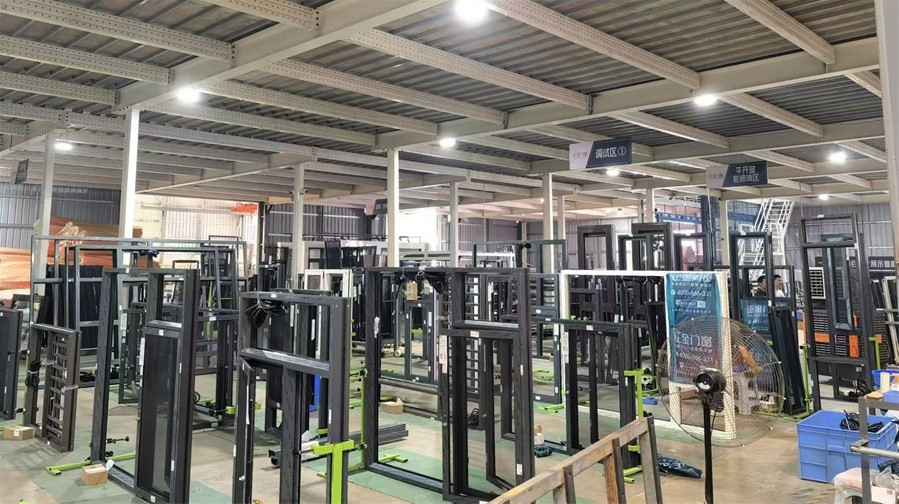 Drive System Debugging Test
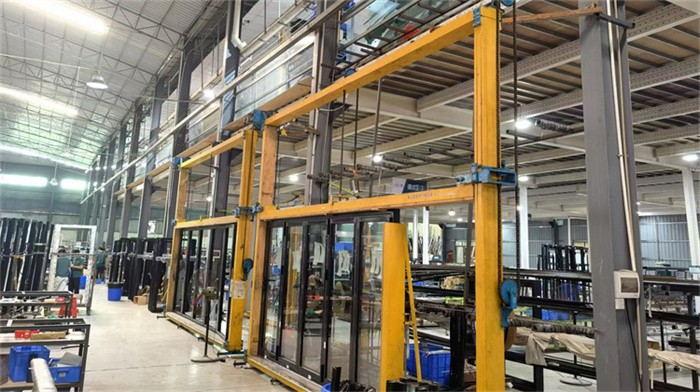 Full Frame Debugging Setup
Automatic aluminum entrance doors are configured differently depending on building type, pedestrian movement patterns, thermal load requirements, and regional fire code mandates.
Requirement: Continuous heavy traffic flow, wide clear opening widths, high durability against shopping cart impact.
Engineering Solution: Heavy-duty double sliding aluminum doors with floor tracks embedded flush, reinforced bottom rails, radar sensors tuned for fast opening response, and anti-pinch photo-beam safety curtains.
Requirement: Minimalist visual profiles, acoustic insulation, air-draft elimination, ultra-smooth silent operation.
Engineering Solution: Curved automatic sliding doors or revolving aluminum doors paired with ultra-narrow sightline framing, acoustic laminated low-E glass, and hidden ceiling-mounted micro-radar sensors.
Requirement: Touchless entry, hermetic air sealing, electromagnetic shielding, easy sanitization.
Engineering Solution: Automated hermetic sliding doors featuring continuous peripheral rubber gaskets that press tightly against the frame upon closing, activated by elbow sensors or non-contact optical wave switches.
The future of automated entry systems lies at the intersection of IoT connectivity, building energy management integration, intelligent predictive maintenance, and ultra-sustainable material lifecycles.
Future automatic door headers will transmit real-time telemetry (cycle counts, motor temperature, vibration harmonics, sensor status) directly to central Building Management Systems via MQTT/BACnet protocols, enabling predictive maintenance before component failure occurs.
Integration of transparent Building-Integrated Photovoltaic (BIPV) glass panels into aluminum sliding door leaves, enabling the door system to generate its own operational electricity and feed excess power back into smart grids.
Sensors linked to indoor/outdoor thermal differentials will automatically adjust door leaf travel distances during extreme winter or summer conditions, shrinking the open envelope size to preserve conditioned indoor air while accommodating pedestrian traffic.
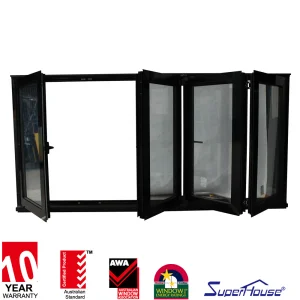
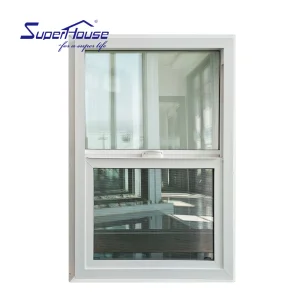
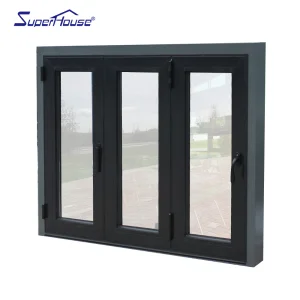
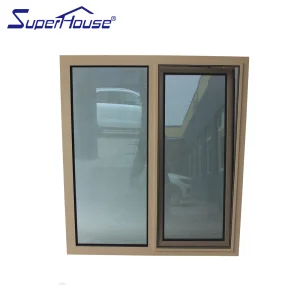
Explore our certified range of commercial, residential, impact-resistant, and high-insulation fenestration systems manufactured for global project delivery.
 Veridor