Why Choose Modern Aluminum Entry Doors?

Time:2026-11-01 Author:Amelia
0%

A front door is more than a finish on the façade. It faces rain, daily handling, temperature shifts, and the first impression visitors carry inside. A Modern Aluminum Entry Door appeals to homeowners who want clean lines and a durable frame without a heavy, traditional look. Aluminum resists rust, though its finish and hardware still need care. Details matter.

Industry data offers useful context, but it needs careful interpretation. The 2024 Cost vs. Value Report from Zonda found that a steel entry-door replacement recouped an estimated 188.1% of its project cost at resale, based on national averages. That figure is not an aluminum-door estimate, and it cannot promise a return for any individual home. Still, it shows why entry upgrades attract attention. A buyer notices a door that closes smoothly, seals evenly, and suits the house.

Performance deserves equal scrutiny. The National Fenestration Rating Council (NFRC) label can help shoppers compare a door’s rated energy performance; ratings depend on the tested product and configuration. Ask about the complete assembly, including glazing, weatherstripping, thermal breaks, and installation—not just the frame material. A sleek aluminum slab can look impressive in a showroom. Poor installation can undermine it.

There are trade-offs. Aluminum can transfer heat, and large glass panels may reduce privacy or increase heat gain without suitable glazing. Compare documented ratings, finish options, warranty terms, and local climate needs before choosing. The best entrance is not merely striking. It works, quietly, every day.
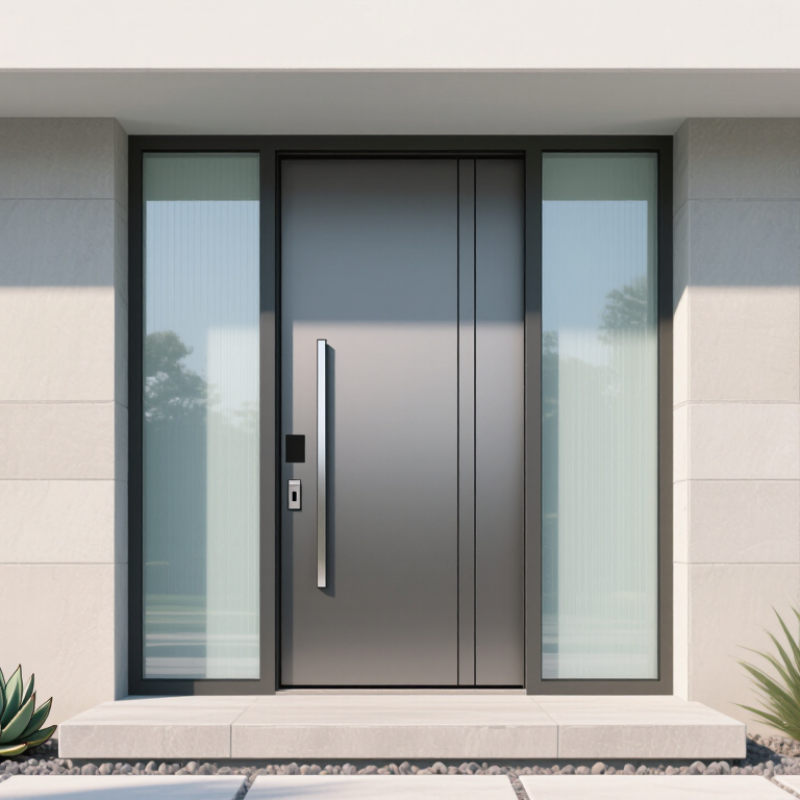
Why Choose Modern Aluminum Entry Doors?

What Defines a Modern Aluminum Entry Door?

A modern aluminum entry door is defined by more than a slim frame or flat finish. It combines a corrosion-resistant aluminum exterior with a thermally broken frame, insulated core, durable seals, and hardware suited to daily use. The thermal break separates the frame’s inner and outer metal sections, reducing direct heat transfer. Look closely at the threshold and frame corners; small gaps can undermine the whole assembly. Clean lines matter, but performance matters more.

Performance should be measurable. The U.S. Department of Energy’s Energy Saver guidance estimates that windows account for 25–30% of residential heating and cooling energy use; this figure is not door-specific, but it highlights why glazed areas deserve attention. For a door with glass, check the National Fenestration Rating Council label for U-factor and solar heat gain coefficient (SHGC), then compare ratings for the intended climate. Also review tested air leakage, water penetration, and structural performance under the applicable NAFS standard. Not every sleek door performs well. A heavy panel may feel reassuring, yet installation, weatherstripping, and a properly supported threshold can matter just as much. The honest trade-off? Aluminum can look crisp and stay dimensionally stable, but poor thermal detailing may leave the interior frame cold to the touch.

How Aluminum Entry Doors Are Designed and Constructed

Modern aluminum entry doors are designed around strength, weather protection, and a clean appearance. Designers start by selecting frame profiles that support the door’s weight without making the entry feel bulky. Thermal breaks, made from insulating material between interior and exterior aluminum sections, can reduce heat transfer. Glazing choices also shape performance: double-pane glass and suitable coatings may improve comfort while keeping the entrance bright. The finish is applied to help resist weathering and everyday scratches. Looks matter, but the frame details matter more.

During fabrication, aluminum sections are cut to measured lengths and joined into a rigid frame. Reinforced corners help keep the opening square, while hinges and locks are positioned to distribute load and support smooth operation. Gaskets compress against the door when it closes, limiting drafts and water entry. Small gaps matter. Drainage channels can guide incidental water back outside rather than letting it collect inside the frame. On site, installers check the opening, shim the frame, and fasten it securely before adjusting the door. Even a well-made assembly can perform poorly if the opening is out of square. That detail is easy to underestimate, and careful installation cannot erase every design trade-off.

Which Performance Benefits Do Aluminum Doors Offer?

Modern Aluminum Entry Doors: Performance in Practice

Aluminum entry doors combine stiff frames with narrow sightlines, leaving more room for glass without bulky profiles. Their strength helps support large panels and frequent daily use. But aluminum transfers heat readily, so frame design matters. Thermal breaks separate interior and exterior metal surfaces, limiting heat flow through the frame. Without one, a door can feel cold to the touch on a winter morning.

For a meaningful comparison, check certified whole-door ratings, not frame claims alone. The National Fenestration Rating Council’s product directory reports U-factor and solar heat gain coefficient; lower U-factor generally means less heat transfer. These figures let homeowners compare complete assemblies, including glazing and frame. Air leakage ratings also matter: a precise latch and continuous weatherstripping help prevent drafts around the threshold. Small gaps count.

Durability is another practical benefit. Aluminum resists rot and does not swell like wood when exposed to moisture, though finishes can still scratch and coastal salt can challenge coatings. Look for documented finish and corrosion testing, plus clear care instructions. A well-installed threshold and sealed perimeter are essential; even a strong door performs poorly when air slips around its edges. The details are easy to overlook.

How Do Aluminum Doors Compare With Other Materials?

When comparing entry doors, aluminum offers a different balance from wood, steel, and fiberglass. Its rigid frame can support large glass panels and slim sightlines, while wood gives a warmer surface and can be refinished. Steel often feels reassuringly solid, but dents and scratches may expose areas that need attention. Fiberglass can imitate wood grain and usually asks for less routine care. No material wins every doorway.

Thermal performance depends on the whole assembly, not just the frame. Look for a thermal break in aluminum, insulated glazing, tight weatherstripping, and a published U-factor. The U.S. Department of Energy says windows account for roughly 25–30% of residential heating and cooling energy use; that figure is not door-specific, but it shows why ratings matter. Aluminum also has a recycling advantage: the International Aluminium Institute reports that recycling uses about 5% of the energy needed to produce primary aluminum. That is meaningful, though recycled content and local end-of-life options vary. Still, aluminum is not automatically the best choice. A cold, poorly sealed frame can feel chilly beside a winter entryway, and its finish may not suit every home.

What Factors Should Guide Your Door Selection?

When choosing a modern aluminum entry door, consider your climate, home layout, and daily routine. Aluminum is strong and resists rust, but it transfers heat more readily than some materials. Look for a well-made thermal break between the inner and outer frames, especially where winters are cold or summers are intense. Ask about tested air and water performance, not just appearance. A narrow frame can bring in more daylight, while insulated glass can help limit heat loss and reduce outside noise.

Security and usability matter just as much. Check the lock type, hinge strength, and whether the door opens comfortably without blocking a hallway or porch. Measure the opening carefully, including the frame, threshold, and clearance for nearby furniture. Professional installation can help prevent drafts and sticking, though even a good door may need adjustment as a house settles. Looks matter, but a striking finish cannot compensate for poor sealing.

Tips: Compare warranty coverage, maintenance needs, and glass options before deciding. If the doorway faces strong sun, ask how the finish handles fading. Get measurements checked on site. It may feel overly cautious, but correcting a sizing mistake is harder than checking twice.

Why Choose Modern Aluminum Entry Doors? - What Factors Should Guide Your Door Selection?

Selection Factor What to Compare Practical Guidance
Frame and thermal design Thermal break, frame construction, glazing configuration, and published whole-door U-factor. Aluminum is strong and corrosion-resistant, but it conducts heat readily. A well-designed thermal break can reduce heat transfer through the frame. Compare complete-door performance rather than relying on frame material alone; a lower U-factor generally means less heat transfer.
Climate and energy needs Local climate, heating and cooling priorities, glass area, and solar heat gain coefficient (SHGC). In colder regions, prioritize suitable insulation and a low U-factor. In sunny climates, consider whether a lower SHGC may help limit unwanted solar heat. The best balance depends on orientation, shading, glazing, and local energy requirements.
Weather sealing Perimeter weatherstripping, threshold design, drainage details, and independently tested air- and water-infiltration performance. Look for a continuous seal around the door and a threshold suited to the exposure. Ask for test results for the complete door assembly, especially in locations subject to wind-driven rain or strong winds.
Strength and security Frame reinforcement, hinge attachment, lock compatibility, strike-plate support, and glazing security options. Choose hardware and reinforcement appropriate to the door size and expected use. A secure door depends on the entire assembly—including frame, hinges, locks, glazing, and installation—not on the panel material alone.
Size and configuration Rough-opening measurements, single or double leaf, sidelights, transom, swing direction, and available clearance. Measure the opening and verify the manufacturer’s installation requirements before ordering. Wider or taller configurations may require additional structural support and should be checked for smooth operation and adequate clearance.
Glazing and daylight Glass area, double- or triple-glazing options, low-emissivity coatings, privacy, and applicable safety-glazing requirements. More glass can increase daylight but may affect heat loss, solar gain, privacy, and security. Confirm that glazing in hazardous locations meets the applicable local building-code requirements.
Finish and maintenance Coating type, color options, exposure to sun or coastal air, cleaning instructions, and warranty coverage. Aluminum does not rust like iron or steel, but finishes can weather and hardware can wear. Follow the care instructions, and check that the finish and components are suitable for the site’s climate and exposure.
Installation and total cost Door, glazing, hardware, delivery, installation, finishing work, and long-term maintenance. Compare itemized quotes for equivalent sizes, configurations, and performance. Correct installation is important for operation, weather resistance, and energy performance; include labor and any opening modifications in the budget.

Note: Performance varies by design, glazing, size, hardware, and installation. Confirm product test data and local code requirements before selecting a door.

FAQS

Why do aluminum entry doors suit large glass panels?

Their rigid frames can support broad glass areas with slim sightlines. That can bring more daylight indoors.

What does a thermal break do?

It separates the inner and outer metal surfaces, slowing heat transfer. Without one, the frame may feel cold on winter mornings.

Which ratings should I compare?

Check whole-door U-factor, solar heat gain, and air leakage ratings. Frame claims alone do not tell the whole story.

Are aluminum doors more energy-efficient than other materials?

Not automatically. Insulated glass, a thermal break, and tight weatherstripping all affect performance.

How does aluminum compare with wood, steel, and fiberglass?

Aluminum supports narrow frames, while wood offers a warmer surface and can be refinished. Steel can dent, and fiberglass often needs less routine care.

How durable are aluminum doors?

They resist rot and do not swell like wood in damp conditions. Finishes can scratch, and coastal salt may challenge coatings.

Can installation affect comfort and performance?

Yes. Poor sealing around the threshold can let drafts through, even with a strong door. Small gaps matter.

What should I check before ordering?

Measure the opening, threshold, and nearby clearance. Check the lock, hinges, warranty, glass options, and finish care; measuring twice can feel fussy, but it may prevent a costly fit problem.

Conclusion

A Modern Aluminum Entry Door combines clean lines, versatile finishes, and practical construction to suit contemporary homes. Its frame is typically formed from durable aluminum profiles, with insulated cores, weather seals, and optional glazing selected to meet design and performance needs. Careful construction helps create a stable door that opens smoothly and fits securely.

Aluminum entry doors can offer strength, resistance to corrosion, low maintenance, and useful thermal and acoustic performance when properly designed and installed. Compared with wood, steel, or fiberglass, aluminum provides a distinctive balance of slim profiles, design flexibility, and durability, though performance varies by configuration. When choosing a door, consider your climate, insulation needs, desired appearance, glazing, security features, maintenance preferences, and installation requirements. The right choice brings these factors together in an entryway that is both functional and welcoming.

Amelia

Amelia

Amelia is a seasoned marketing professional with a wealth of expertise in our company’s core offerings. With an unwavering passion for driving growth and innovation, she plays a pivotal role in shaping our marketing strategies and enhancing brand visibility. A key aspect of her responsibilities......