10 Best Aluminum Entrance Door Suppliers for Global Buyers

Time:2026-10-18 Author:Amelia
0%

Choosing an Aluminum Entrance Door supplier requires more than comparing prices or attractive product photos. Global buyers must examine profile quality, thermal-break design, hardware performance, glazing options, and production consistency. A reliable supplier should provide clear drawings, tested specifications, finish samples, and practical installation guidance. Small details matter. A misaligned hinge or weak weather seal can damage a project’s reputation.

Architect Ludwig Mies van der Rohe famously said, “Less is more.” His principle remains useful when evaluating modern Aluminum Entrance Door systems. Clean lines should support performance, not hide weaknesses. Look for powder-coated or anodized finishes, reinforced corners, multi-point locks, drainage channels, and packaging that protects surfaces during long-distance transport. Suppliers should also explain lead times, replacement policies, quality inspections, and communication procedures.

This guide reviews ten leading Aluminum Entrance Door suppliers for international buyers. The selection considers manufacturing experience, customization ability, documented quality practices, export readiness, and customer support. No shortlist is perfect. Regional standards, climate conditions, and installation skills can change the final result. A coastal project may need stronger corrosion resistance. A cold-climate building may require superior thermal insulation. I may also overvalue technical documentation, although it often reveals how seriously a supplier manages risk. Buyers should request current samples and verify claims directly. A beautiful door is not enough. It must arrive undamaged, fit accurately, operate smoothly, and remain dependable after years of daily use.
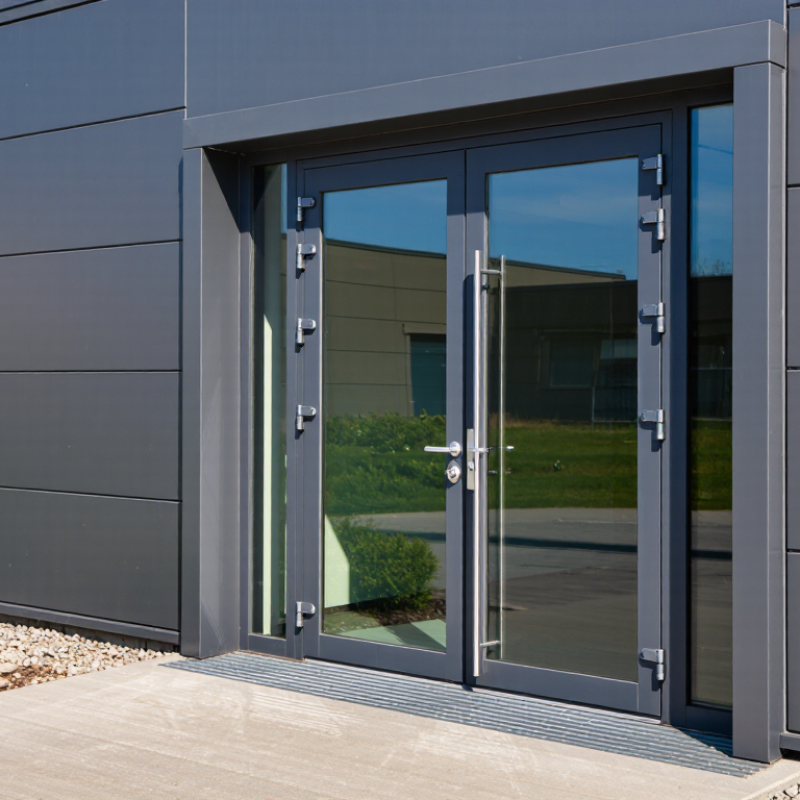
10 Best Aluminum Entrance Door Suppliers for Global Buyers

What Defines a Reliable Aluminum Entrance Door Supplier

A reliable aluminum entrance door supplier proves quality beyond polished catalogs. Ask for alloy grades, coating specifications, and test reports. A serious supplier can explain wall thickness, thermal breaks, drainage paths, and hardware performance in clear language. Vague answers deserve caution.

Look for practical manufacturing evidence. Factory photos should show cutting, corner joining, sealing, and final inspection. Request a physical sample before placing a large order. Check whether the frame stays square after transport and whether the gasket closes evenly. Small gaps often become expensive problems.

Documentation matters. Reliable suppliers provide drawings, packing details, installation guidance, and traceable quality records. They should discuss wind loads, water resistance, local climate, and replacement parts. Transparent warranty terms are essential. So is responsive communication.

Do not judge service only by the lowest quotation. A cheaper door may use thinner profiles or inconsistent powder coating. That difference appears after months of sunlight and repeated use. No supplier gets every detail right. Even an experienced buyer can overlook delivery damage or installation conditions. A dependable supplier welcomes questions, records changes, and corrects mistakes without hiding behind technical language. Trial orders and independent inspections can reduce uncertainty for global buyers.

Key Factors for Comparing Global Door Manufacturers

Global buyers should compare aluminum entrance door manufacturers through verified evidence, not polished catalog images. Request alloy details, profile wall thickness, thermal-break design, coating specifications, and hardware sources. A dependable supplier can explain each component clearly and provide production records.

Ask for samples before placing a large order. Inspect corner joints, gasket compression, drainage holes, lock alignment, and surface consistency under natural light. Test the sample several times. A door that feels smooth once may reveal weak hinges after repeated use. Review reports for air leakage, water resistance, wind pressure, thermal performance, and operating cycles. Confirm that testing matches the destination market’s requirements.

Factory experience also matters. Review similar export projects, packaging methods, lead-time records, and quality-control checkpoints. Photos help, but shipment documents and inspection reports provide stronger proof. Compare warranty coverage, spare-part availability, communication speed, and responsibility for damaged goods. Ask how the manufacturer handles color variation or delayed components. The answer often exposes operational maturity.

Price can mislead. Very low quotations may hide thin profiles, basic hardware, or incomplete testing. Still, higher prices do not guarantee better doors. I have seen attractive samples fail because the packaging was too weak for long-distance transport. That possibility deserves attention. Select a manufacturer that communicates limitations honestly, accepts reasonable inspections, and keeps specifications consistent from sample to shipment.

Ten Leading Aluminum Entrance Door Suppliers for International Buyers

International buyers often judge aluminum entrance door suppliers by more than appearance. The ten leading suppliers usually combine tested alloy profiles, accurate fabrication, stable finishing, and export experience. Their doors should resist rain, heat, corrosion, and repeated daily use. I have found that practical details matter most. A clean corner joint can reveal more than a glossy catalog image.

Strong suppliers provide clear technical documents, including profile thickness, thermal performance, glass specifications, hardware grades, and packing methods. They also explain customization limits before production begins. Some offer insulated frames, multi-point locks, concealed hinges, and powder-coated surfaces for different climates. Reliable factories share sample details, inspection photos, and realistic production schedules. Ask for independent test reports when available. Marketing claims alone are weak evidence.

The ten leading supplier groups may differ in scale, but dependable communication remains essential. An experienced export team confirms measurements, opening directions, delivery terms, and installation conditions in writing. Small errors become expensive overseas. I once saw a project delayed because the sill height was assumed, not verified. That mistake was avoidable. Buyers should also inspect packaging strength, replacement policies, and after-sales response times. A supplier may produce beautiful doors yet struggle with service. That possibility deserves honest attention.

Product Quality, Customization, and Certification Standards

Choosing among the 10 best aluminum entrance door suppliers requires more than comparing prices.

Product quality appears in material thickness, frame alignment, weld consistency, and smooth hardware movement. During factory evaluations, I inspect corner joints, drainage paths, and protective packaging. Small defects often become expensive installation problems.

Customization should support the building, not merely decorate it. Reliable suppliers can adjust door dimensions, thermal breaks, glass types, surface finishes, thresholds, hinges, and access hardware.

They should confirm tolerances with technical drawings before production. A physical sample or approved mock-up reduces misunderstandings. It also exposes design weaknesses early.

A polished catalog can still hide limited manufacturing capability.

Certification evidence deserves careful review. Ask for current test reports covering air permeability, water tightness, wind resistance, thermal performance, and acoustic insulation where relevant.

Standards such as EN 14351-1, ASTM procedures, or regional building requirements may apply differently. ISO 9001 supports process control, but it does not prove every door performs well.

Request traceable material records, batch inspection results, and independent laboratory documents. I have learned that certificates without matching product specifications create false confidence.

Clear warranty terms, inspection access, replacement procedures, and realistic lead times reveal a supplier’s reliability. Mistakes happen, even with experienced teams. Suppliers willing to document and correct them are usually safer partners for global buyers.

Ordering, Shipping, and After-Sales Support Considerations

Global buyers should judge aluminum entrance door suppliers by the ordering process, not only by product photos. Ask for a detailed quotation covering profiles, glass, hardware, finishes, packaging, and installation requirements. Confirm dimensions, opening direction, color codes, and tolerance limits before production starts. An approved drawing prevents expensive misunderstandings. Small omissions matter.

Experienced buyers should also request a sample corner, finish swatch, and hardware specification. These items reveal quality more clearly than a polished catalog. Before payment, clarify the deposit structure, production schedule, inspection method, and documentation provided. A reliable supplier should explain what happens when measurements change. Perfect orders rarely exist.

Shipping requires practical planning. The supplier should describe pallet materials, corner protection, moisture control, and container loading photos. Check whether the agreed trade term includes inland transport, export documents, or only port delivery. Ask for carton marks and a complete packing list. These details help customs agents and warehouse teams work faster. Build extra time into the schedule, especially for customized doors or busy ports.

After-sales support should be measurable. Request a written warranty, response-time commitment, replacement-part policy, and installation guidance. Good suppliers can provide labeled spare parts, video instructions, and remote troubleshooting. Keep photos, serial numbers, and inspection records after arrival. I have seen minor scratches become serious disputes because nobody recorded the unloading condition. One weakness remains common: buyers often focus on the lowest price and ignore service capacity. That choice can cost more later.

FAQS

What should I ask an aluminum entrance door supplier before ordering?

Ask about alloy grade, profile thickness, thermal breaks, drainage paths, coatings, hardware, and test reports. Vague answers are warning signs.

Why is a physical sample important?

A sample shows whether the frame stays square and the gasket closes evenly. Small gaps can become costly later. Catalogs can hide weaknesses.

Which quality details deserve close inspection?

Check corner joints, weld consistency, frame alignment, drainage, coating uniformity, and hardware movement. Inspect small details carefully.

How can I evaluate customization capability?

Request technical drawings for dimensions, glass, hinges, thresholds, finishes, and access hardware. Confirm tolerances before production. An approved mock-up helps.

Which certificates and reports should I request?

Request current reports for air, water, wind, thermal, and acoustic performance when relevant. Also request material records and batch inspections. A certificate alone proves little.

What should a detailed quotation include?

It should list profiles, glass, hardware, finishes, packaging, installation needs, and delivery terms. Confirm opening direction and color codes. Small omissions matter.

How can I reduce shipping damage?

Ask about corner protection, pallet materials, moisture control, and container loading photos. Keep extra time for customized doors and busy ports.

What after-sales support is genuinely useful?

Look for written warranty terms, response times, spare parts, installation guidance, and remote troubleshooting. Photograph unloading conditions and record serial numbers. I sometimes overlook this.

Conclusion

Choosing a reliable Aluminum Entrance Door supplier requires careful evaluation of product quality, manufacturing experience, customization capabilities, and international service. Global buyers should compare suppliers based on material strength, thermal insulation, weather resistance, design flexibility, production capacity, and compliance with recognized safety and performance standards. A dependable manufacturer should also provide clear technical specifications, quality inspection procedures, certification documentation, and consistent communication throughout the project.

This guide introduces ten leading types of suppliers suitable for international purchasing and explains how to assess their products, customization options, and certification standards. It also highlights practical considerations such as requesting samples, confirming dimensions and finishes, reviewing payment terms, arranging secure packaging, and understanding shipping schedules. Strong after-sales support, including installation guidance, spare parts availability, warranty coverage, and responsive problem resolution, can significantly reduce project risks and help buyers establish a stable, long-term supply relationship.

Amelia

Amelia

Amelia is a seasoned marketing professional with a wealth of expertise in our company’s core offerings. With an unwavering passion for driving growth and innovation, she plays a pivotal role in shaping our marketing strategies and enhancing brand visibility. A key aspect of her responsibilities......