A Premium Aluminum Entry Door is more than a striking panel at the front of a home. It must manage daily use, weather exposure, security, and visual appeal. Architect Louis Sullivan’s principle, “form ever follows function,” offers a useful lens for comparing manufacturers. On an entry door, that means looking beyond a showroom finish to the frame, hardware, seals, and installation details. Details matter.
This guide to the Top 10 Premium Aluminum Entry Door Manufacturers examines what buyers can assess: design range, material and finish choices, thermal performance information, customization, and support after purchase. A slim aluminum profile can create a clean, modern entrance, while a carefully chosen finish can complement stone, timber, or painted siding. But appearance alone does not prove durability. Ask how finishes are tested, what the warranty covers, and whether the manufacturer provides clear product specifications. Not always.
The comparison is intended to help homeowners, architects, and builders ask better questions—not to suggest that one brand suits every project. Climate, opening size, budget, and installation quality all affect the outcome. A premium door can still disappoint if its seals are poorly fitted or its hardware feels wrong in daily use. That trade-off matters. Manufacturer claims deserve scrutiny, and product details may vary by model or region. Use the shortlist as a starting point, then confirm current specifications and service options directly with each company.
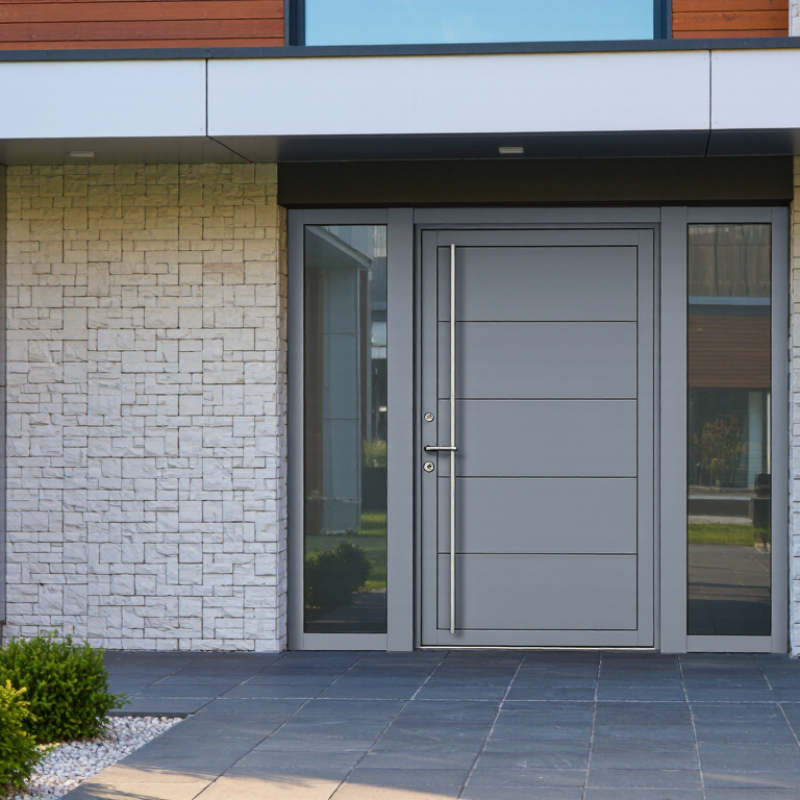
A premium aluminum entry door is defined by tested performance, not a thick frame or polished finish alone. Look for documented ratings for air leakage, water penetration, and structural pressure, such as those evaluated under the NAFS fenestration standard. These figures help compare products under consistent conditions. A low U-factor also matters, but it cannot describe the whole door. Thermal breaks, insulated cores, and carefully sealed frame joints reduce paths for heat transfer. Small details count.
The U.S. Department of Energy’s Energy Saver guidance estimates that heat gain and loss through residential windows account for 25–30% of home heating and cooling energy use. That figure concerns windows, not entry doors, but it shows why the glazed area and perimeter seals deserve close attention. Premium specifications should identify glass performance, weatherstripping, and tested assembly ratings—not just center-of-glass values. Air leakage testing under ASTM E283 can offer useful comparison data. Still, laboratory results do not guarantee a perfect installation. A narrow gap at the sill can invite drafts and water. Easy to overlook. Check hardware durability, finish resistance, and repairable components too; a beautiful door that is difficult to maintain may not feel premium after several winters.
How Aluminum Entry Door Manufacturers Design and Build Their Products
A premium aluminum entry door starts with a design brief: opening size, exposure to wind-driven rain, traffic, and desired daylight. Engineers select frame depth, profile shape, and wall thickness to balance rigidity with weight. Extruded sections are cut precisely, then joined with reinforced corners. Thermal breaks separate interior and exterior aluminum, reducing heat transfer. Glazing pockets, drainage channels, and replaceable weather seals are planned before assembly. Small details matter.
Manufacturers also validate performance, not just appearance. The NAFS standard evaluates air leakage, water penetration, and structural performance under specified test conditions. NFRC ratings help buyers compare energy-related measurements, including U-factor. The Aluminum Association’s report Aluminum: The Element of Sustainability states that recycling aluminum uses about 95% less energy than producing primary aluminum. Recycled content can therefore support lower-impact material choices, though actual results depend on sourcing and processing. Fit comes first.
Tips: Ask for documented test results and the door’s NFRC label. Check that the threshold, frame, and wall opening are designed as one system. At installation, inspect the perimeter seal and confirm the sill drains outward. Test it twice. A beautiful slab can still leak if the opening is poorly prepared. Manufacturers sometimes underplay that last point.
When comparing the Top 10 Premium Aluminum Entry Door Manufacturers, look beyond finish and price. Check the tested assembly, not just the aluminum profile. Useful criteria include U-factor, air leakage, water resistance, thermal-break design, and hardware durability. Ratings can change with glass, size, and configuration. A polished specification sheet is helpful, but it cannot guarantee a careful installation.
The U.S. Department of Energy’s Energy Saver guidance estimates that windows account for 25–30% of residential heating and cooling energy use. That figure is window-specific, not a door rating, but it shows why the whole opening deserves attention. Ask manufacturers for test documentation tied to the actual door configuration. Compare threshold details, frame depth, and finish performance in your local climate. Small details matter.
Tips: Request a written warranty and sample finish. Ask how the thermal break is protected at corners. If possible, inspect a full-size installed unit; small showroom samples hide real-world alignment issues. Measurements can be imperfect, so confirm the opening on site before ordering.
A useful comparison of premium aluminum entry door manufacturers starts with what can be inspected, not showroom claims. Check frame-corner joints, coating consistency, hardware alignment, and how firmly the slab closes. Ask whether finish samples are tested for fading and corrosion, and whether thermal figures describe the complete door assembly. A polished sample can hide weak details. Request drawings, warranty terms, and installation tolerances; vague answers can make later service harder. That matters.
Design should suit the building rather than chase a trend. Compare sightline widths, panel options, handle placement, and custom sizing against the actual entry dimensions. Performance depends on more than a thick-looking frame: seals, threshold design, glazing, and installation all affect drafts and water entry. Ask how the door handles repeated opening, especially if it faces strong wind or heavy daily use. I sometimes overvalue sleek detailing; it can complicate cleaning or replacement. No single specification tells the whole story.
A premium sample tells you little about how a door will perform after years of use. Ask for project-specific test data, including air leakage, water penetration, and structural performance. ASTM E283, E331, and E330 address these areas. Check that the tested assembly matches your proposed size, glass, hardware, and configuration. A report for a smaller door may not represent yours. Ask for evidence.
Thermal performance deserves equal scrutiny. The U.S. Department of Energy estimates that heat gain and loss through residential windows account for 25–30% of home heating and cooling energy use; the figure is not specific to doors, but it highlights the importance of the building envelope. Compare NFRC-rated U-factor and solar heat gain coefficient where applicable, and ask how thermal breaks, seals, and glazing affect the complete door assembly.
Details matter.
For coastal or wet locations, request finish and corrosion-resistance information, plus written maintenance guidance. Review warranty exclusions, lead times, replacement-part availability, and installation support. A specification can look excellent on paper; site conditions and installation still complicate things.
That is easy to underestimate.
Start with opening size, wind-driven rain, daily traffic, and desired daylight. These guide frame depth and profile shape. Fit comes first.
It separates interior and exterior aluminum, reducing heat transfer through the frame. It does not eliminate heat loss.
Ask for test results covering air leakage, water penetration, and structural performance. Check that they match the door’s actual size and configuration.
U-factor and other ratings can change with glass, size, and configuration. Compare equivalent specifications, not just headline numbers.
Check drainage channels, weather seals, threshold design, and sill slope. Water should drain outward. Small details matter.
Confirm measurements at the site before ordering. Inspect the perimeter seal and sill drainage after fitting. Test it twice.
Recycling aluminum can use about 95% less energy than producing primary aluminum. Actual impact depends on sourcing and processing.
Request a written warranty and finish sample. If possible, inspect a full-size installed door. Small samples can hide alignment problems.
This guide explores what makes a Premium Aluminum Entry Door a high-quality choice, including the materials, construction methods, finishes, and design details that influence durability, security, and appearance. It explains how manufacturers turn aluminum into entry systems through processes such as precision fabrication, careful assembly, and performance testing, while balancing strength with energy efficiency and design flexibility.
The article also presents ten leading manufacturers without focusing on brand names, then compares the qualities buyers may consider, including build quality, customization, weather resistance, and overall performance. To help readers choose a suitable manufacturer for their project, it outlines practical evaluation criteria such as product specifications, available design options, installation support, warranty coverage, and the manufacturer’s ability to meet the project’s requirements and budget.

Veridor