Choosing an Aluminum Exterior Door involves more than selecting a clean, modern profile. The right manufacturer can affect performance, installation, maintenance, and long-term value. This guide introduces ten manufacturers for homeowners, architects, and contractors comparing exterior door options.
The companies differ in product range, customization, finishes, hardware, and available performance information. Some focus on large glass panels and slim frames. Others offer configurations suited to renovations or demanding weather conditions. Small details matter: a threshold’s height, a frame’s thermal break, or the feel of a lock can shape daily use. Not always obvious.
The list is a starting point, not a universal ranking. A suitable choice depends on climate, building design, budget, and the installer’s experience. Published specifications can help readers compare dimensions, glazing, finish options, and stated performance, but details may vary by model and market. Verify current product information directly with each manufacturer. Ask about warranties, lead times, replacement parts, and installation requirements before making a decision. A polished catalog is useful, but it cannot answer every site-specific question. That part deserves a second look. By comparing these manufacturers carefully, readers can build a shortlist that fits their project rather than relying on appearance alone.
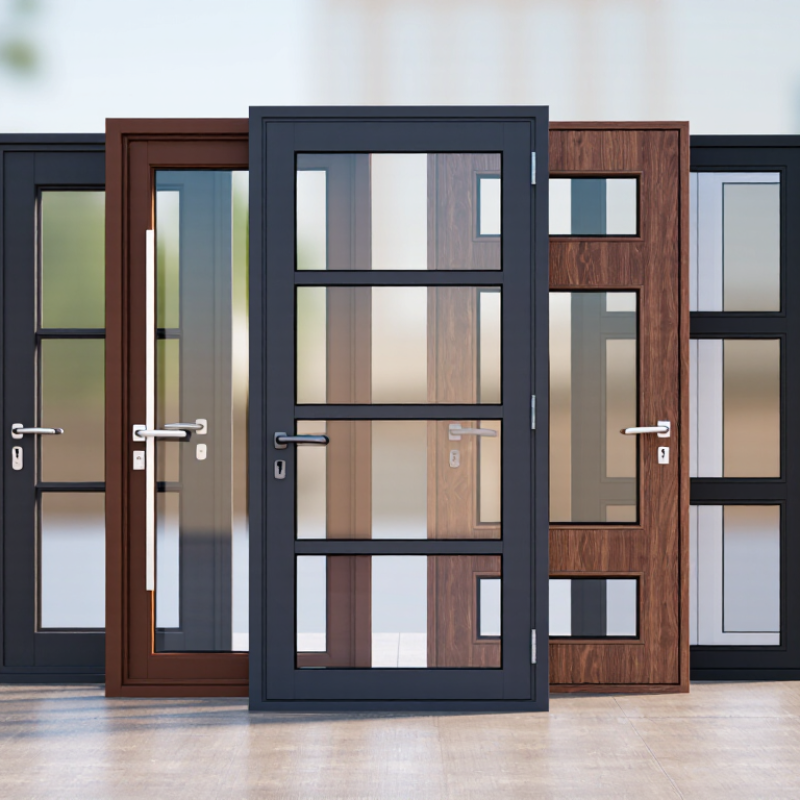
An aluminum exterior door manufacturer does more than cut profiles and fit hinges. It controls design, thermal performance, fabrication, finish quality, and product testing. Look for clear specifications for frame depth, alloy, thermal breaks, glazing, weather seals, and hardware. Details matter. A well-built frame should resist racking, while drainage paths help move rain away from the threshold. The maker should also provide test evidence for air leakage, water penetration, and structural performance, using recognized fenestration standards such as NAFS. Ask how results apply to the exact door configuration; a test on one size or glass option may not describe another.
Material choices need context. The U.S. Department of Energy reports that windows account for about 25–30% of residential heating and cooling energy use. That figure is not a door statistic, but it shows why the building envelope deserves careful attention. The Global Status Report for Buildings and Construction puts buildings and construction at about 39% of global energy-related carbon emissions. A responsible manufacturer can explain how its door’s thermal break, seals, glazing, and installation details affect performance, without promising that one component solves whole-building energy use. Ask for published test data, finish-care guidance, and replacement-part support. A glossy sample helps, but it cannot prove long-term performance. Even reputable specifications leave room for site conditions and installer skill.
Evaluating aluminum exterior door manufacturers starts with the evidence behind their performance claims. Review technical data for frame and panel construction, alloy specifications, thermal breaks, and finish thickness. Ask how air leakage, water resistance, and structural strength are tested. Clear test methods matter more than broad promises.
Look closely at practical details. A well-designed sill should direct water outward, while tight corner joints help limit drafts. Check hardware options, glazing compatibility, maintenance guidance, and the availability of replacement parts. Installation instructions should explain anchoring and sealing, not leave critical steps to guesswork. Small details count.
Compare warranty terms, production lead times, customization limits, and the responsiveness of technical support. Request written answers and sample documents where possible. A polished brochure is not enough. Still, evaluation has limits: laboratory results may not reflect poor installation or harsh local weather. Scores can help organize comparisons, but they are not perfect. Assess each manufacturer against the project’s actual opening size, exposure, and energy goals.
Ten notable aluminum exterior door manufacturers are best compared by what they build well, not by appearance alone. Some focus on thermally broken frames that reduce heat transfer. Others specialize in coastal finishes, slim sightlines, oversized pivot doors, or custom entry systems. Look for makers with clear specifications for frame depth, glazing thickness, hardware, and tested air and water performance. Commercial door producers may offer durable, high-traffic designs, while retrofit specialists can adapt frames to existing openings. Some manufacturers emphasize recycled aluminum or low-maintenance finishes. Others provide a broader range of colors and textures. These are useful distinctions, but product quality still varies by model.
Tips: Ask for a detailed drawing and a physical finish sample. Check how the sill drains after rain, and confirm who handles installation. A polished showroom sample can hide small practical issues. Even a premium door may disappoint if the opening is measured poorly or the local climate is overlooked.
Compare warranty terms, replacement-part availability, and service coverage before choosing. Request performance data for the exact configuration, not just the product family. Pay attention to seals and corner joints; these details affect drafts and water entry. I would not assume that the thinnest frame is always the best choice. A slightly wider profile may provide better stability or suit the building more naturally.
Comparing aluminum exterior door manufacturers requires more than counting finishes. Review their ranges for hinged, sliding, and folding systems, then check opening sizes, glazing options, and threshold designs. A showroom sample may look slim, yet the installed frame can feel bulky. Ask for section drawings and a full-size corner sample.
Performance depends on the complete assembly, not aluminum alone. Thermal breaks reduce heat transfer through frames, while weather seals and drainage details help limit drafts and water entry. The U.S. Department of Energy’s Energy Saver guidance estimates that windows account for 25–30% of residential heating and cooling energy use; that figure applies to windows, but it shows why glazed doors deserve careful thermal review. Small details matter. Compare tested U-factor, air leakage, and water-penetration results under recognized fenestration test standards, rather than relying on broad claims.
Customization can include frame depth, hardware, colors, glass type, and accessible sill options. These choices affect lead times and compatibility, so request written specifications for the exact configuration. A manufacturer offering many options is not automatically the better fit. Check whether custom sizes retain the same tested performance, and confirm who verifies site measurements. This step is often overlooked—and sometimes the reason a well-chosen door disappoints.
Thermal-performance reference: U-factor is the reciprocal of R-value when both use consistent units. Lower U-factors indicate less heat transfer. These calculated reference points are not ratings for any manufacturer or product.
When comparing exterior doors, check whole-door U-factor alongside air and water infiltration results, structural performance, available configurations, finishes, glazing, and hardware options. Confirm ratings against the specific product and test documentation.
Top 10 Aluminum Exterior Door Manufacturers
How to Choose a Manufacturer for Your Project
Choosing an aluminum exterior door manufacturer starts with the opening, not the brochure. Record the rough opening, exposure to driving rain, desired glazing, and expected daily use. The U.S. Department of Energy’s Energy Saver guidance estimates that windows account for 25–30% of residential heating and cooling energy use. That figure is not a door-specific estimate, but it shows why thermal performance deserves attention across the whole building envelope.
Compare documented performance, not just frame appearance. The National Fenestration Rating Council’s labels report U-factor and solar heat gain coefficient; lower U-factor means less heat transfer, while the best solar gain depends on climate and orientation. Ask for test results for the actual door size and configuration, including glazing, threshold, and hardware. A standard-size test may not represent a wide entry system. Details matter.
Check how the manufacturer handles installation guidance, replacement parts, finish options, and project-specific questions. For coastal or high-wind sites, request evidence that the assembly meets the project’s specified structural and water-penetration criteria. AAMA/WDMA/CSA 101/I.S.2/A440 is a recognized fenestration performance standard. Ask who conducts testing and whether reports cover the exact product series. One thing is easy to miss: a strong frame cannot compensate for a poorly installed sill. Compare written warranties carefully, and note any unanswered questions before ordering.
Use this brand-neutral comparison guide to evaluate aluminum exterior door manufacturers. Product performance depends on the complete door configuration, installation, climate, and applicable local requirements; request project-specific documentation before making a selection.
| No. | Evaluation factor | What to verify | Why it matters |
|---|---|---|---|
| 1 | Product range and configuration | Check available door styles, frame and panel options, opening directions, threshold types, sidelights, and glazing configurations. Confirm the manufacturer can provide the specified dimensions. | A suitable product range helps align the door with the building design, access needs, and rough opening. |
| 2 | Thermal performance | Request the tested or certified whole-door U-factor and, where available, solar heat gain information for the proposed configuration. Compare results using the same rating method and units. | Thermal performance affects heat transfer through the complete door assembly. Applicable energy requirements vary by location and project. |
| 3 | Air and water resistance | Ask for laboratory test reports or product ratings for air leakage and water penetration, including the tested size, configuration, and test conditions. | Ratings help assess weather resistance, but actual results also depend on installation, drainage details, and exposure conditions. |
| 4 | Structural performance | Confirm the door's applicable design-pressure or structural test rating and whether it covers the required size, glazing, hardware, and configuration. Check local wind-load requirements. | Structural capacity must suit the project's location and opening conditions; a rating for one configuration may not apply to another. |
| 5 | Applicable certifications and standards | Review current test reports, product approvals, and certifications required for the project. In North America, relevant references may include NFRC energy ratings and AAMA/WDMA/CSA 101/I.S.2/A440, where applicable. | Documentation provides a verifiable basis for comparing performance and confirming compliance with project specifications and local codes. |
| 6 | Materials and corrosion protection | Ask for details on aluminum alloy and temper, frame construction, finish type, coating specifications, and maintenance instructions. Confirm suitability for coastal or other corrosive environments. | Material and finish choices influence durability and the level of care needed in the intended environment. |
| 7 | Glazing and safety options | Confirm available glass build-ups, insulated-glass options, safety glazing, and glazing performance documentation. Check whether the proposed glass meets applicable impact and safety requirements. | Glass selection affects safety, thermal performance, daylight, and compliance; requirements depend on location and opening conditions. |
| 8 | Security and hardware | Review the locking system, hinges, cylinder or access-control compatibility, hardware materials, and any tested security ratings. Confirm compatibility with the door size and usage frequency. | Hardware affects operation, access control, serviceability, and the security features of the installed assembly. |
| 9 | Installation and technical support | Ask for installation instructions, approved flashing and sealing details, preparation requirements, and access to technical support. Clarify who is responsible for field measurements and installation. | Correct installation is essential for the door to perform as intended and to manage water, air, and movement at the opening. |
| 10 | Lead time, warranty, and service | Obtain a written schedule for production and delivery. Review warranty coverage, exclusions, claim procedures, replacement-part availability, and the process for after-sales service. | Clear commitments help manage project scheduling and provide a practical route for addressing defects or service needs. |
Selection tip: Compare written, project-specific submittals rather than relying on general product descriptions. Verify that each performance rating applies to the exact door size, glass, frame, hardware, and configuration being quoted.
Review technical data for frame construction, alloy specifications, thermal breaks, and finish thickness. Ask for test methods, not just broad promises.
Compare tested U-factor, air leakage, water penetration, and structural strength. Use results for the exact door configuration when available.
Check whether the sill directs water outward and whether corner joints fit tightly. Ask for details about seals and drainage.
Look at hinged, sliding, and folding systems, plus glazing, thresholds, hardware, and available sizes. A showroom sample can look slimmer than the installed frame.
Thermal breaks reduce heat transfer through frames. Glazed doors also deserve careful review because glass area can affect energy performance.
Frame depth, colors, glass, hardware, and accessible sills may be customizable. Confirm that custom sizes retain tested performance.
Section drawings show frame dimensions, while a full-size corner sample reveals how parts meet. It is worth checking both.
Instructions should explain anchoring and sealing. Also ask about replacement parts, maintenance, lead times, warranty terms, and technical support.
No. Lab results may not reflect poor installation or harsh local weather. I would still double-check site measurements and exposure.
This article explains what distinguishes an Aluminum Exterior Door manufacturer, including expertise in materials, engineering, production quality, and support for different building needs. It also outlines how manufacturers can be evaluated through factors such as durability, weather resistance, thermal performance, design options, product consistency, and customization capabilities. These criteria provide a practical framework for comparing suppliers without relying on brand names alone.
The guide considers ten notable types of manufacturers and compares their product ranges, performance features, and ability to tailor dimensions, finishes, and configurations. It concludes with advice for choosing a manufacturer based on project requirements, climate, budget, design goals, installation considerations, and after-sales service. By weighing these factors together, homeowners, designers, and project teams can identify a suitable partner and select an exterior door solution that balances appearance, function, and long-term value.

Veridor