How to Choose the Best Aluminium Front Door?

Time:2026-10-13 Author:Isabella
0%

Choosing the best Aluminium Front Door is not simply a matter of selecting a stylish colour. The right entrance must balance thermal performance, security, durability, weather resistance, and daily comfort. A door may look impressive in a showroom, yet perform poorly beside a cold hallway or exposed porch.

Dr. Joseph Lstiburek, a respected building-science expert, offers a useful principle: “Don’t fight water; manage it.” This idea applies directly to front-door selection. Examine the frame, threshold, drainage details, seals, and installation quality. Water should move away from the entrance, not collect beneath it. Small details matter.

Look for a thermally broken aluminium frame, effective weather seals, and glazing suited to your climate. Ask for the door’s thermal performance, not vague claims about energy efficiency. Check the locking system, hinges, cylinder protection, and frame strength. Security should feel reassuring, not visually aggressive.

Finish quality deserves attention too. Powder coating can provide a durable surface, but poor preparation may cause premature fading or damage. Touch the sample. View it in daylight. Colours often appear different indoors.

The installation team matters as much as the product. An excellent door can still leak air if the opening is measured badly or sealed carelessly. This is often overlooked.

There is no perfect Aluminium Front Door for every home. A coastal property, busy family entrance, and minimalist apartment need different solutions. Budget matters, but choosing the cheapest option may create expensive regret. This guide will help you compare practical performance with appearance, so your final decision feels considered rather than rushed.
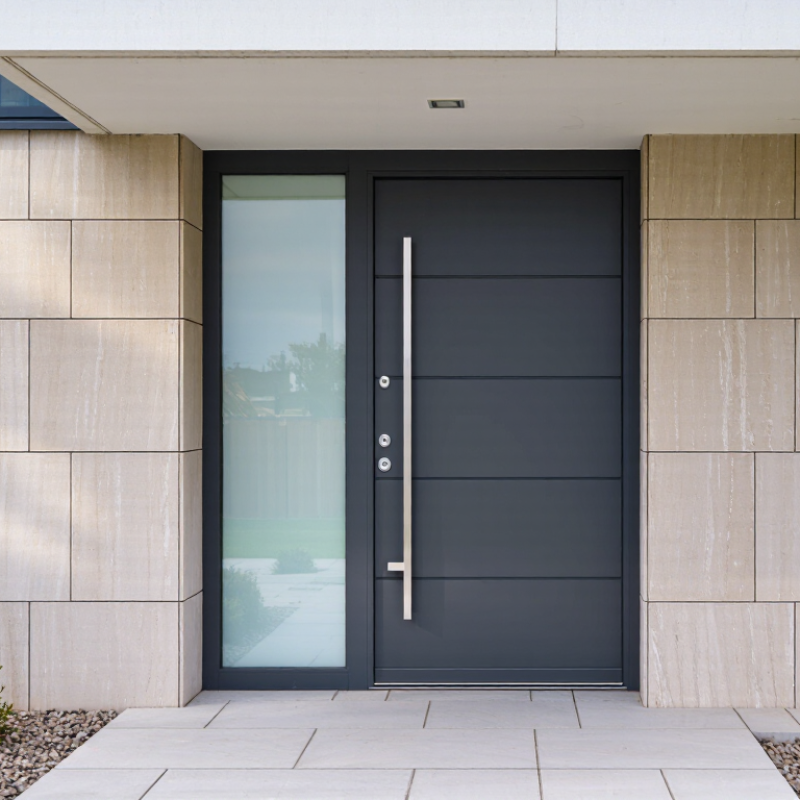
How to Choose the Best Aluminium Front Door?

Define Your Requirements for an Aluminium Front Door

Before choosing an aluminium front door, define what your home actually needs. Measure the opening carefully, including the frame, threshold, and surrounding wall. A small measurement error can create expensive installation problems. Decide whether security, insulation, daylight, or appearance matters most. Most homeowners want everything, but budgets usually force a compromise.

Consider your local weather. Strong sun, heavy rain, coastal air, and freezing temperatures affect the specification. Ask about thermal breaks, insulated glass, weather seals, drainage, and corrosion-resistant finishes. A qualified installer should explain the door’s U-value, locking system, and water resistance in clear terms. Do not rely only on attractive photographs. A slim frame may look modern, yet it could reduce glazing space or affect heat performance.

Think about daily use, too. Will children open it with wet hands? Do you need a low threshold for easier access? Is the entrance exposed to wind? I once underestimated the importance of door swing direction, and the handle later felt awkward beside a narrow hallway. That mistake was avoidable. Check the opening direction, handle height, glass privacy, and maintenance needs before ordering. Powder-coated aluminium usually requires little care, but seals and hinges still need occasional inspection. Written specifications matter. Verbal promises can be forgotten.

Compare Aluminium Door Styles, Designs, and Opening Options

Choosing an aluminium front door starts with comparing styles, not chasing the most dramatic design. A flush panel creates a calm, modern entrance, while narrow glass sections bring daylight into a dark hallway. Slatted or patterned panels add character, but they may require more cleaning. In my experience, the best design balances the house frontage, privacy needs, and daily maintenance.

Opening options change how the entrance feels and functions. A single hinged door suits most compact porches and gives a familiar, controlled swing. A wider double door creates a generous entrance, though it needs more clearance inside and outside. Sliding doors can save space, but their tracks need regular cleaning. Pivot doors feel impressive, yet they often demand careful planning around weight, seals, and surrounding walls. I once focused too much on appearance. The clearance was nearly forgotten.

Tips: Mark the door swing on the floor before ordering. Check furniture routes, steps, and nearby walls. Ask for the opening width, threshold height, glass specification, and drainage details in writing. A low threshold may improve access, but it must still manage rainwater properly. Test handle height and locking movement at a showroom or sample installation.

Aluminium offers stable frames and clean sightlines, but performance depends on accurate fitting. Ask the installer about measured tolerances, thermal breaks, weather seals, and adjustment after installation. Small gaps can cause noticeable drafts. The perfect style is not always the most practical one.

How to Choose the Best Aluminium Front Door?

Compare aluminium door styles, designs, and opening options by their representative clear opening width.

The figures show common residential planning values in millimetres. A single-panel door is suitable for compact entrances, while French pairs, sliding doors, and bifold doors provide progressively wider access. Final dimensions depend on the frame system, hardware, threshold, accessibility requirements, and local building regulations.

Evaluate Thermal Performance, Security, and Weather Resistance

How to Choose the Best Aluminium Front Door?

A good aluminium front door should keep indoor temperatures stable. Look for a thermally broken frame, not bare aluminium. This design reduces heat transfer through the metal. Check the quoted U-value, because a lower figure usually means better insulation. The glass matters too. Double glazing can help, while low-emissivity glass may improve comfort near the entrance. In practice, poor installation can weaken excellent specifications. I have seen small gaps around the frame create noticeable draughts.

Tips: Ask for the complete door U-value, not only the glass rating. Press the seals gently. They should feel flexible, continuous, and firmly fitted. Check that the threshold limits water entry without creating a trip hazard. These small details are easy to overlook.

Security deserves equal attention. Choose a strong multi-point locking system, reinforced hinges, and laminated security glass where glazing is within reach. The cylinder should resist common forms of forced manipulation. However, more locks do not automatically mean better protection. The frame, hinges, installation, and surrounding wall must work together. Ask for independently verified performance data, rather than accepting vague claims. Weather resistance also depends on drainage channels and compression seals. Inspect corners carefully. Water often enters through neglected joints. A durable finish should resist sunlight, rain, and coastal air, although no coating remains perfect forever. Regular cleaning and occasional seal checks are still necessary.

Choose the Right Finish, Glazing, Hardware, and Custom Features

An aluminium front door should suit your daily routine, not only your property’s exterior. I have found that the finish changes how the entrance feels in different weather. Powder-coated surfaces usually offer dependable colour protection, but dark shades may show dust and scratches more clearly. Textured finishes can disguise small marks. Still, samples can look different beside brick, stone, or painted walls. View them outdoors before deciding.

Glazing affects privacy, daylight, security, and comfort. Clear glass brightens a narrow hallway, while frosted or patterned glass protects privacy without making the entrance gloomy. Ask about insulated glazing and low-emissivity options for better temperature control. Hardware also deserves careful attention. A substantial handle should feel comfortable, while hinges, locks, and thresholds need smooth, reliable operation. Check compatibility with your frame and local safety requirements. Small details matter.

Tips: Test the handle with wet hands. Inspect the threshold after rain. Ask how the finish is maintained. Measure twice, honestly. Custom features can include side panels, matching letter plates, concealed drainage, or unusual opening sizes. These additions may improve the entrance, but they can also increase cost and installation time. I once underestimated how a side panel changed the hallway’s sightline. A simple drawing, reviewed with an experienced installer, can prevent that mistake.

Check Installation Standards, Maintenance Needs, and Total Cost

How to Choose the Best Aluminium Front Door?

Installation quality affects comfort, security, and long-term cost. Ask for the applicable local standard, such as EN 14351-1 or NFRC testing requirements. The frame should sit squarely, with continuous shims and a sealed threshold. Poor fitting can create drafts beneath the door. The U.S. Department of Energy reports that windows can cause 25–30% of household heating and cooling energy use. A glazed aluminium door deserves similar attention. Choose a thermally broken frame and low-emissivity glazing where the climate requires it.

Do not compare quotations by the door price alone. Include removal, structural preparation, delivery, flashing, hardware, glazing, and future adjustments. The International Energy Agency reported that buildings used about 30% of global final energy in 2022. Small envelope improvements can support wider energy goals, though actual savings depend on installation and household use. Powder-coated aluminium usually needs mild cleaning and fresh water. QUALICOAT maintenance guidance commonly recommends cleaning at least twice yearly, especially near roads or saltwater. A cheap finish may become expensive.

Tips: Request the whole-door U-value, not only the glass rating. Check drainage holes before signing off. Photograph the sealed threshold. Keep the maintenance instructions. Ask who pays if the door needs adjustment after seasonal movement. A longer warranty sounds useful, but its exclusions may matter more. I would also keep a small repair allowance; careful estimates still miss unexpected masonry work.

FAQS

What should I measure before ordering an aluminium front door?

Measure the opening, frame, threshold, and surrounding wall carefully. A small error can cause costly fitting problems. Record every measurement in writing.

Which features should I prioritise?

Decide whether security, insulation, daylight, or appearance matters most. Most homes need all four. Budget may force a compromise.

How does local weather affect my choice?

Strong sun, heavy rain, coastal air, and freezing temperatures need different specifications. Ask about thermal breaks, weather seals, drainage, and corrosion-resistant finishes.

What door style suits a smaller entrance?

A single hinged door usually suits compact porches. Narrow glass sections can brighten a dark hallway. Slatted panels look distinctive but may collect more dirt.

When are double, sliding, or pivot doors suitable?

Double doors need extra clearance. Sliding doors save space but require clean tracks. Pivot doors look impressive, yet their weight and sealing need careful planning.

How can I check the door’s thermal performance?

Choose a thermally broken frame, not bare aluminium. Ask for the complete door U-value. Double glazing and low-emissivity glass may improve comfort.

What security details deserve attention?

Look for multi-point locking, reinforced hinges, and suitable laminated glass. The frame, wall, hinges, and installation must work together. More locks alone are not always better.

How can I prevent drafts and water entry?

Inspect flexible, continuous seals and properly formed drainage channels. Check corners carefully. Small installation gaps can create noticeable drafts.

What practical details are easy to overlook?

Mark the door swing on the floor before ordering. Check furniture routes, steps, handle height, glass privacy, and threshold height. I once underestimated swing direction, and the handle felt awkward beside a narrow hallway.

How much maintenance does an aluminium front door need?

Powder-coated aluminium usually needs little care. Clean the surface regularly and inspect seals and hinges occasionally. No finish stays perfect forever.

Conclusion

Choosing the best Aluminium Front Door begins with clearly defining your needs, including the entrance size, preferred appearance, level of privacy, and daily usage. Compare different styles, panel designs, colours, and opening options to find a door that suits your home’s architecture and available space. It is also important to assess thermal performance, security features, weather resistance, and durability, especially if the door will face strong sunlight, rain, wind, or changing temperatures.

Your final selection should include a suitable finish, energy-efficient glazing, reliable hardware, and any custom features required for comfort or accessibility. Before ordering, confirm that the door will be installed according to recognized standards and that the installer has the necessary experience. Consider cleaning requirements, adjustment needs, expected service life, warranty terms, and the total cost rather than focusing only on the initial price. A well-planned Aluminium Front Door can improve security, energy efficiency, appearance, and long-term value.

Isabella

Isabella

Isabella is a dedicated marketing professional with a sharp focus on driving brand growth and engagement through strategic content creation. With an extensive background in digital marketing, she combines her passion for storytelling with her keen understanding of industry trends to deliver......