How to Choose the Best Aluminum Entry Door

Time:2026-10-01 Author:Oliver
0%

Choosing the best Aluminum Entry Door involves more than comparing colors and prices. A front door must suit your home, climate, security needs, and daily routine. It should open smoothly, seal tightly, and remain stable through changing temperatures. Small details matter, such as the threshold height, hinge quality, and drainage design.

Experienced installers usually begin with accurate measurements. They check the wall opening, surrounding structure, and existing frame before recommending a door. This practical step prevents gaps, uneven movement, and costly adjustments later. Aluminum offers useful advantages, including corrosion resistance, low maintenance, and strong structural performance. However, not every aluminum door provides the same results. Poor insulation, thin panels, or weak hardware can reduce comfort and durability.

Look closely at the construction. A reliable Aluminum Entry Door should include a suitable thermal break, weather-resistant seals, and a finish designed for outdoor exposure. Ask about tested air leakage, water resistance, security hardware, and warranty coverage. Regional building requirements may also influence the correct configuration, so qualified local advice remains valuable.

Appearance still matters. A warm bronze finish may complement brick, while a matte black surface can sharpen a modern exterior. Yet style should not hide practical weaknesses. No door is perfect. Even careful recommendations may overlook unusual weather, heavy use, or an imperfect opening. Consider those risks honestly before deciding. Compare specifications, inspect samples, and request written installation details. The best choice balances appearance, performance, maintenance, and dependable professional support.
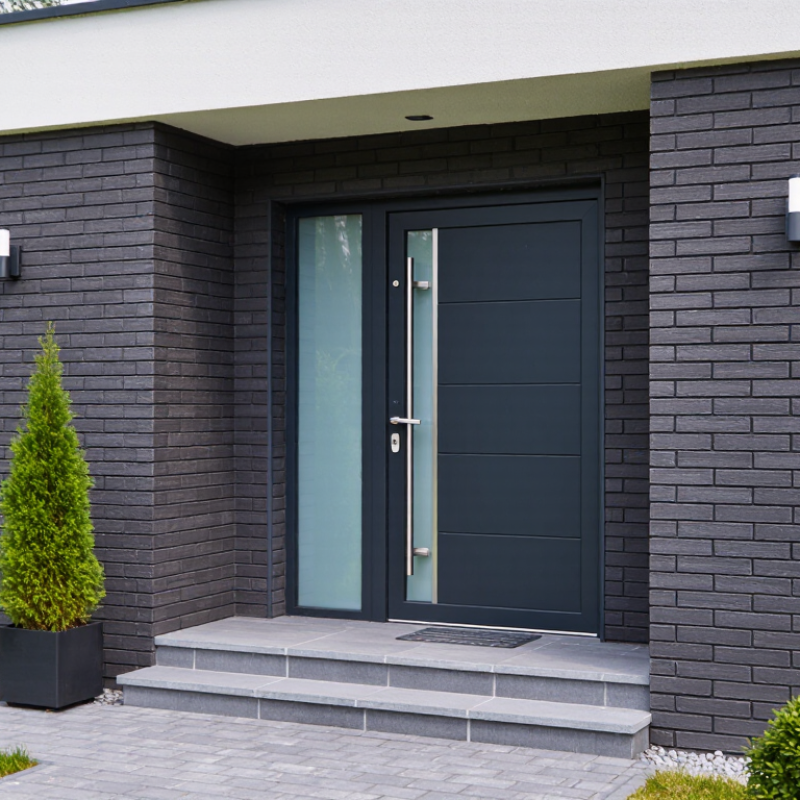
How to Choose the Best Aluminum Entry Door

Define Your Entryway’s Size, Style, and Functional Needs

How to Choose the Best Aluminum Entry Door

Begin by defining your entryway’s exact size. Measure the width at the top, middle, and bottom. Measure the height on both sides and at the center. Measure twice. Uneven walls can change the required door dimensions. Record the rough opening, frame depth, threshold height, and available swing space. A door that opens into furniture will quickly become frustrating. Consider whether the entrance needs a single door, a wider double door, or side panels for natural light.

Style should support your home’s architecture, not compete with it. Clean lines suit modern walls, while divided glass may complement traditional details. Consider how sunlight moves across the entrance during the day. Clear glass brightens a dark hall, but textured or insulated glass can improve privacy and comfort. Finish samples should be viewed outdoors, because indoor lighting can distort color. Looks can mislead. I once underestimated how strongly a dark finish absorbed afternoon heat.

Function determines long-term satisfaction. Check the door’s thermal performance, weather seals, drainage design, and hardware quality. A thermally broken aluminum frame can reduce heat transfer in many climates. Choose hinges and locks that feel solid without being difficult to operate. Families should consider children, older residents, deliveries, and emergency access. Local building requirements may affect threshold height, glazing, and door swing. Ask for tested performance data rather than relying on attractive claims. Maintenance still matters; inspect seals and moving parts periodically, even when the door appears perfect.

Compare Aluminum Door Materials, Frames, and Construction Quality

Choosing an aluminum entry door starts with the alloy and thermal design. Standard aluminum is strong, light, and corrosion resistant, but it transfers heat quickly. A thermally broken frame separates interior and exterior metal with an insulating strip. This reduces conductive heat flow. The U.S. Department of Energy reports that window-related heat loss and gain can represent 25–30% of residential heating and cooling energy. A poorly insulated door can worsen that problem.

Frame depth matters. Look for continuous thermal breaks, insulated panels, tight corner joints, and compression weatherstripping. A steel-reinforced aluminum frame may resist warping better than a thin hollow profile. Glazing should carry an NFRC-certified U-factor and solar heat gain coefficient, not vague “energy efficient” wording. NFRC ratings allow products to be compared under consistent conditions. Small gaps still matter. Air leakage often appears around the sill and lock side, where installation errors are common.

Construction quality deserves hands-on checking. The door should close evenly, remain stable when latched, and show no visible daylight around its seals. Water penetration testing under AAMA/WDMA/CSA 101 standards offers stronger evidence than showroom appearance. The International Aluminium Institute notes that recycling aluminum uses roughly 5% of the energy required for primary production, so recycled content can improve material efficiency. Still, I would not treat recycled content as proof of durability. Hardware alignment, drainage, and installation workmanship can defeat an excellent frame.

Evaluate Insulation, Security Features, and Weather Resistance

How to Choose the Best Aluminum Entry Door

Insulation should be checked before appearance. During home inspections, I look for a thermally broken aluminum frame. It reduces heat transfer through the metal. A dense, weather-sealed core also helps control indoor temperatures. Ask for the door’s U-factor and air-leakage rating. Lower U-factors usually indicate better insulation. Small gaps matter. Run your hand around the closed frame on a windy day. If you feel movement, the seal may need adjustment.

Security depends on more than a strong-looking panel. Choose a reinforced frame with a properly anchored strike plate. Multi-point locking systems can distribute force along the door edge. A solid cylinder and protected hinges add useful resistance. Check whether the lock engages smoothly without forcing the handle. Security starts here. I would also inspect the wall structure, because even a strong door can fail when installed poorly.

Weather resistance requires attention to water, wind, and sunlight. Look for compression gaskets that remain flexible in cold conditions. A raised threshold can limit rain entering during storms. The bottom seal should touch the sill evenly, without dragging. Powder-coated finishes generally resist fading, but color changes can still occur under intense sun. Review installation instructions carefully. This is where choices become less perfect. A door rated for severe weather may still leak if the surrounding masonry is uneven or the drainage path is blocked. Ask an experienced installer to check those details before final fitting.

Select Suitable Finishes, Hardware, Glass, and Opening Systems

How to Choose the Best Aluminum Entry Door

A durable aluminum entry door begins with the right finish. Powder coating usually resists fading, scratches, and moisture better than basic liquid paint. Ask for documented testing, not attractive color samples alone. A finish near the coast needs stronger corrosion protection and regular cleaning. Check hinges, locks, handles, and thresholds as one system. Heavy doors need adjustable hinges and securely anchored hardware. The wrong handle can make daily use surprisingly uncomfortable.

Glass affects comfort, security, and energy performance. Low-emissivity glazing can reduce heat transfer through windows and glazed doors. The U.S. Department of Energy reports that low-e coatings may cut window energy loss by 30% to 50%, depending on climate and construction. Select laminated or tempered glass where impact resistance matters. Read the National Fenestration Rating Council label carefully. It reports U-factor, solar heat gain, and visible transmittance. However, ratings do not replace proper installation.

The opening system should match the entrance, wall, and traffic pattern. Inward-opening doors often protect hinges, while outward-opening systems can preserve interior space. Sliding systems need clean tracks and correctly sized rollers. Automatic closers improve control, but excessive closing force feels harsh and may damage seals. Measure the rough opening before ordering. Small errors become expensive quickly. I would not choose hardware only by appearance. A refined door can still perform poorly when drainage, alignment, or flashing is ignored. Specification sheets help, but site conditions remain the difficult variable.

How to Choose the Best Aluminum Entry Door - Select Suitable Finishes, Hardware, Glass, and Opening Systems

Aluminum entry door selection guide covering finishes, hardware, glass, and opening systems
Selection Area Decision Factor Recommended Choice Useful Data or Typical Range Key Benefit and Consideration
Door Frame Thermal performance Choose a thermally broken aluminum frame for heated or air-conditioned buildings. The insulating separator reduces direct heat transfer between the exterior and interior frame sections. Look for published whole-door U-factor or U-value data rather than relying only on frame material. Lower U-values indicate better insulation. Better energy performance than non-thermally broken framing, but usually at a higher purchase cost.
Door Frame Frame depth and structural capacity Select a frame system suitable for the door height, width, glass weight, wind exposure, and expected traffic level. Large or heavy doors require stronger profiles and reinforced hinge zones. Confirm maximum panel size, maximum panel weight, hinge capacity, and wind-load data with the fabricator or installer. Heavier-duty profiles improve rigidity and durability but may reduce clear opening width and increase weight.
Finish Powder coating Use an exterior-grade powder-coated finish when a wide color selection, consistent appearance, and resistance to routine wear are important. Confirm the coating specification, pretreatment process, color uniformity, and warranty conditions. Performance depends on exposure, cleaning, and surface preparation. Durable and low-maintenance, although scratches or cut edges may require professional repair to match the original finish.
Finish Anodized finish Consider anodizing for a metallic appearance and a hard aluminum-oxide surface, especially where a natural metal look is preferred. Color choices are generally more limited than with powder coating. Confirm the anodizing class, color consistency, and suitability for the local environment. Good resistance to peeling because the finish is integrated with the aluminum surface, but color matching and field repair can be difficult.
Finish Coastal or high-pollution exposure Choose a finish and pretreatment rated for marine, humid, industrial, or high-pollution conditions. Use corrosion-resistant fasteners and schedule regular salt or pollutant removal. The required protection depends on distance from the coast, salt concentration, humidity, pollution, and cleaning frequency. Enhanced protection can extend service life, but it may increase cost and limit available colors or textures.
Finish Color and solar heat Use lighter colors where direct solar exposure and indoor heat gain are concerns. Dark colors can be selected when appearance is the priority, provided the system is designed for the expected temperature range. Ask for solar reflectance or color-performance information when the door receives strong sunlight. Light colors can reduce surface heating; dark colors may show dust, fading, and thermal movement more clearly.
Hardware Hinges Select hinges according to door weight, panel dimensions, opening frequency, and security requirements. Adjustable hinges can simplify alignment and gasket compression. Verify hinge load capacity, quantity, corrosion resistance, and compatibility with the selected frame and door panel. Heavy-duty and adjustable hinges improve long-term operation but may require more installation space and adjustment time.
Hardware Lock type For a main entry door, use a lockset or multipoint locking system that engages the frame at more than one location, especially on tall or wide panels. Check local building and fire requirements, cylinder type, backset, security rating, emergency egress needs, and compatibility with access control. Multipoint locking can improve security, air tightness, and panel alignment, but it is more complex to install and service.
Hardware Handles and pull hardware Choose a handle size and shape that provide a comfortable grip and sufficient clearance from the door surface. Select finishes that coordinate with the frame and resist frequent contact wear. Confirm handle height, fixing method, spindle or cylinder compatibility, pull length, and accessibility requirements. Larger pull handles improve usability on heavy doors but may project farther into circulation areas.
Hardware Door closer and restrictor Add a controlled door closer for high-traffic entrances, shared buildings, or doors required to close reliably. Use a limiter where nearby walls or glazing could be damaged. Select a closer based on door width, door weight, wind conditions, closing force, and accessibility requirements. Improves controlled closing and security, but excessive closing force can make the door difficult for some users to operate.
Hardware Threshold and weather seals Use a properly drained threshold, continuous perimeter seals, and a compatible bottom seal. Ensure the threshold does not conflict with accessibility requirements. Check water drainage design, air leakage performance, threshold height, seal replacement access, and compatibility with the floor finish. Better sealing improves comfort and weather resistance, while a raised threshold may create a trip or wheelchair-access issue.
Glass Safety glazing Use tempered or laminated safety glass where required by local codes, particularly near doors, in sidelights, and in large low-level glazed areas. Verify the required safety-glazing markings, thickness, impact classification, and local code provisions before ordering. Tempered glass offers increased impact resistance and breaks into small pieces; laminated glass remains bonded after breakage but is usually heavier and more costly.
Glass Insulating glass unit Select double glazing for a balanced combination of insulation, condensation control, and cost. Consider triple glazing in colder climates or where very low heat transfer is required. Typical insulating glass units use two or three panes separated by sealed air or inert-gas cavities. Compare center-of-glass and whole-door thermal data. More panes can improve thermal and acoustic performance but add weight, thickness, and hardware requirements.
Glass Low-emissivity coating Use low-emissivity glass when reducing heat transfer is important. Select the coating orientation and solar-control level according to climate and window or door orientation. Compare U-factor, solar heat gain coefficient, visible transmittance, and condensation resistance rather than judging performance by appearance alone. Can reduce heating or cooling loads, but stronger solar-control coatings may reduce daylight or change the glass color.
Glass Privacy and daylight Choose clear glass for maximum daylight, frosted or acid-etched glass for diffuse privacy, and patterned glass when privacy and decorative texture are both needed. Evaluate visible light transmission, privacy level, maintenance requirements, and compatibility with the selected insulating glass construction. More privacy usually means less direct visibility and, depending on the pattern, reduced light transmission.
Glass Acoustic control For busy streets or noisy common areas, use laminated acoustic glass, asymmetric pane thicknesses, and well-sealed frames where the complete door system supports the design. Compare the complete assembly's sound transmission data when available. Glass alone does not determine the acoustic performance of the entire door. Improved noise reduction may increase glass thickness, weight, and cost.
Opening System Single hinged door Choose a single hinged door for compact entrances, straightforward installation, and frequent everyday use. Confirm handing, clear opening width, swing direction, hinge side, threshold condition, and required maneuvering clearance. Simple and efficient, but the clear opening is limited by the single panel width and swing area.
Opening System Double hinged door Use a pair of hinged panels where a wider opening is needed for moving furniture, equipment, or large groups of people. Define the active and inactive leaves, meeting stile, flush bolts, astragal, clear opening, and overall frame width. Provides a wider passage, but the meeting joint and inactive leaf require careful sealing and hardware coordination.
Opening System Pivot door Consider a pivot system for a large, visually prominent entrance when the floor, head, and side clearances can accommodate the pivot hardware. Verify maximum panel dimensions and weight, pivot location, swing radius, floor preparation, closer requirements, and weather-seal design. Supports large panels and distinctive designs, but the swing path can reduce usable space and installation is more demanding.
Opening System Sliding door Select a sliding system where swing clearance is limited or a wide glazed opening is desired. Use a lift-and-slide style system for heavier panels when supported by the design. Check track drainage, roller capacity, panel weight, stacking or pocket requirements, security locking points, and clear opening width. Saves swing space, but tracks need cleaning and the system may have different air and water performance from a hinged door.
Opening System Out-swing or in-swing Choose the swing direction based on interior circulation, exterior landing space, weather exposure, security, accessibility, and emergency egress requirements. Confirm local code requirements for egress, landing dimensions, door maneuvering clearance, and exit-door swing direction. Out-swing doors can preserve interior space; in-swing doors may be better protected from some exterior obstructions. Code requirements take priority.
Installation Weatherproofing and drainage Use a continuous sill pan or equivalent drainage strategy, properly sealed perimeter joints, and flashing compatible with the wall construction. Inspect the sill, corners, frame-to-wall seals, weep paths, and transitions between the door threshold and finished floor. Correct installation is essential for air and water performance; poor sealing can cause leaks regardless of door quality.
Maintenance Cleaning and inspection Clean the frame and glass with mild, non-abrasive products. Inspect seals, hinges, locks, drainage openings, and fasteners at least annually or more often in harsh environments. Avoid strong acids, alkaline cleaners, abrasive pads, and unapproved solvents. Lubricate hardware only according to the hardware supplier's instructions. Routine maintenance preserves appearance and operation and helps identify seal or alignment problems before they become expensive repairs.
Final Selection Performance documentation Compare complete door-system data, including thermal, air, water, structural, security, and operational performance where applicable. Request drawings, dimensions, glass build-up, finish specification, hardware schedule, installation details, and applicable test reports. More documentation makes products easier to compare and reduces installation risk, but custom requirements may increase lead time.
Selection note: Final dimensions, safety-glazing requirements, fire or egress provisions, accessibility details, wind-load resistance, and installation methods should be confirmed against the applicable local building codes and project conditions.

Verify Installation Requirements, Maintenance Needs, and Long-Term Value

How to Choose the Best Aluminum Entry Door

A strong aluminum entry door begins with installation requirements, not appearance. Confirm the rough opening, wall depth, sill height, drainage path, and local wind exposure. A small measurement error can create uneven gaps and water intrusion. The U.S. Department of Energy reports that windows account for about 25% to 30% of residential heating and cooling energy use. Doors are not windows, but poor sealing can still undermine comfort. Check the door’s U-factor, air-leakage rating, and weatherstripping details through certified performance labels. Ask whether the installer will use compatible flashing and a continuous sealant bead. I would not rely on foam alone.

Tips: Request a written installation checklist. Photograph the opening before work begins. Test the latch after installation. A door that closes smoothly matters more than a perfect showroom finish.

Maintenance needs are usually modest, but they are not zero. Inspect hinges, sweeps, seals, and drainage openings every six months. Wash aluminum surfaces with mild soap, especially near coastal air or winter de-icing salts. Avoid abrasive pads. They can damage protective coatings and invite corrosion around fasteners. The National Association of Home Builders’ life-expectancy research shows that exterior doors can serve for decades when properly maintained. However, that evidence does not guarantee equal results for every aluminum system. The 2024 Cost vs. Value Report also shows that entry-door replacement can offer strong resale value, but its figures mainly represent steel doors. Treat that benchmark carefully, not as proof that every aluminum door pays back equally.

How to Choose the Best Aluminum Entry Door

A practical evaluation framework for verifying installation requirements, maintenance needs, thermal performance, and long-term value before purchase.

The scores are planning weights on a 100-point scale, designed to help buyers compare priorities. Confirm structural requirements, local building codes, product specifications, and warranty conditions before installation.

FAQS

What aluminum door frame design improves energy efficiency?

Choose a thermally broken frame with a continuous insulating strip. It reduces heat transfer between indoor and outdoor metal. Small gaps matter. Insulated panels and tight corner joints also help.

Why does frame depth matter?

Deeper profiles can provide more room for insulation and stronger hardware anchoring. A steel-reinforced frame may resist warping better than a thin hollow profile. Not always. Construction quality still decides much of the result.

How can I judge an aluminum door’s construction quality?

Close and latch the door several times. It should move evenly without rubbing or visible daylight around the seals. Check the sill and lock side carefully. Water testing offers stronger evidence than showroom appearance.

Which glass features should I consider?

Look for certified U-factor, solar heat gain, and visible transmittance ratings. Lower-emissivity glass can reduce heat transfer. Tempered glass resists heat and impact. Laminated glass can improve impact protection and security.

Does powder coating provide better protection?

Powder coating usually resists fading, scratches, and moisture better than basic liquid paint. Ask for documented performance testing, not color samples alone. Coastal air needs extra care. Clean the surface regularly.

How should I choose hinges, locks, handles, and thresholds?

Treat the hardware as one system. Heavy doors need adjustable hinges and firmly anchored hardware. A beautiful handle may feel awkward daily. Check alignment, grip comfort, and closing force.

Which opening system fits different entrances?

Inward-opening doors can protect hinges, while outward-opening doors preserve interior space. Sliding doors need clean tracks and correctly sized rollers. Measure the rough opening twice. Small errors become expensive quickly.

What installation details should be confirmed before ordering?

Confirm the rough opening, wall depth, sill height, drainage route, and local wind exposure. Ask for compatible flashing and a continuous sealant bead. Do not rely on foam alone. Photograph the opening before installation.

How much maintenance does an aluminum entry door require?

Inspect hinges, sweeps, seals, and drainage openings every six months. Wash surfaces with mild soap, especially near salt or winter de-icing chemicals. Avoid abrasive pads. They can damage protective coatings and expose fasteners to corrosion.

Conclusion

Choosing the best Aluminum Entry Door begins with understanding your entryway’s dimensions, architectural style, daily use, and practical requirements. Consider whether you need a single, double, sliding, or pivot opening, and select a door size that allows comfortable movement without compromising surrounding space. Compare material thickness, frame design, core construction, and overall craftsmanship to ensure the door is durable and stable. Pay close attention to insulation performance, reliable locks, reinforced hinges, weather seals, and resistance to moisture, wind, and temperature changes.

Your final selection should also reflect your preferred finish, hardware style, glass configuration, and operating system. Powder-coated or treated surfaces can improve appearance and reduce upkeep, while suitable glazing can provide daylight without sacrificing privacy or energy efficiency. Before purchasing, confirm that the opening is properly prepared and that installation requirements are clearly understood. Consider cleaning, hardware care, refinishing needs, expected service life, energy savings, and warranty coverage to evaluate the door’s long-term value rather than focusing only on its initial cost.

Oliver

Oliver

Oliver is a seasoned marketing professional with a wealth of expertise in driving brand awareness and engagement. With a deep understanding of our company's product offerings, he consistently delivers high-quality content that enriches our professional blog. His insights not only shed light on......