An Aluminium Entry Door is more than a modern alternative to timber or uPVC. It is a carefully engineered entrance, combining an aluminium frame, insulated panels, secure hardware, and weather-resistant finishes. In daily use, it may face muddy shoes, driving rain, strong sunlight, and repeated opening. Its performance depends on the complete system, not the metal alone.
Fenestration consultant John Leech explains, “A successful entrance balances security, thermal performance, durability, and a welcoming appearance.” That balance matters. Aluminium resists warping, swelling, and corrosion when properly finished, while slim profiles can create a wider glass area and stronger visual connection with the exterior. Powder-coated colours also offer a consistent surface, from matte black to soft grey.
Small details matter.
Look closely at the threshold. Is it thermally broken? Does the weather seal meet evenly? Can the hinges support the door’s weight without dragging? These questions are easy to overlook, even by confident buyers. High-quality products usually provide better insulation, reliable locking points, and clearer manufacturer documentation. However, not every Aluminium Entry Door performs equally well. Installation quality, drainage design, and local exposure can change the result.
The right choice should reflect the building, climate, security needs, and available budget. Aluminium is not automatically perfect. It can feel industrial, and poor specifications may create cold spots or difficult operation. A sensible evaluation compares tested performance, warranty terms, finish quality, and installer experience before focusing on appearance.
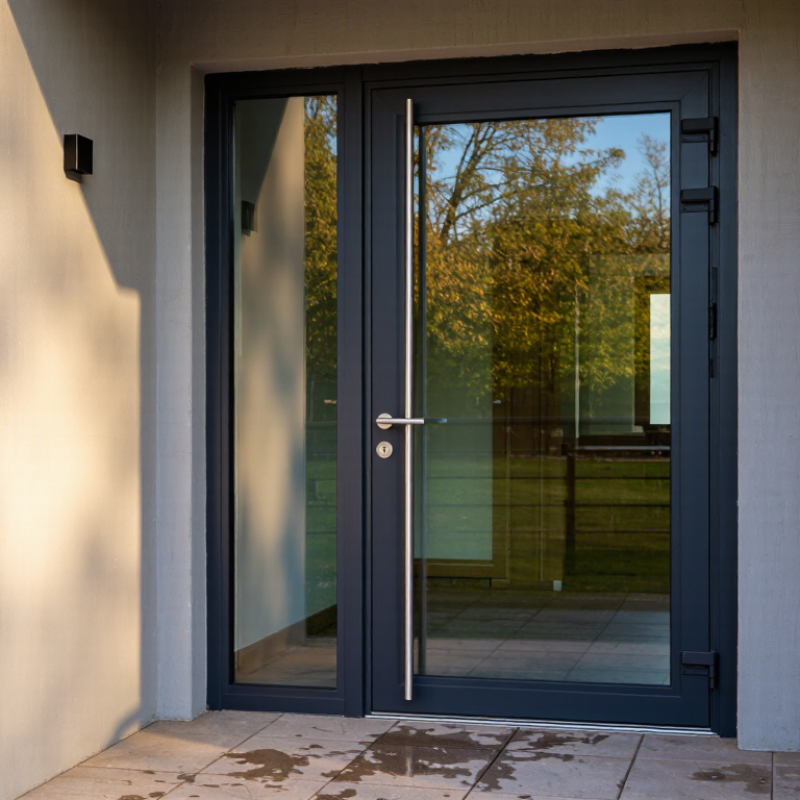
What Is an Aluminium Entry Door and Why Choose It?
An aluminium entry door uses engineered alloy profiles rather than pure aluminium. Architectural grades commonly contain magnesium and silicon, with smaller amounts of iron, copper, manganese, zinc, or titanium. EN 573-3:2019 defines the chemical composition of wrought aluminium alloys used in construction. A frequent architectural alloy is the 6xxx series, valued for strength, formability, and surface finishing.
The key figure is density. European Aluminium’s Aluminium in Building technical guidance places aluminium’s typical density near 2.70 g/cm³. That is roughly one-third the density of steel. It is light. However, alloying elements can shift the value slightly. Designers should not treat 2.70 g/cm³ as an exact figure for every profile.
This low density helps reduce lifting effort during installation. It also allows deeper, hollow sections that improve stiffness without creating an excessively heavy door leaf. In practical work, frame geometry matters as much as alloy chemistry. Thin sections may feel weak, despite good material data. Thermal performance needs attention too. Aluminium conducts heat efficiently, so modern doors usually require insulated profiles and carefully sealed joints. The European Committee for Standardization’s EN 14351-1 supports performance assessment for external pedestrian doors, including air permeability, water tightness, and resistance to wind load. Those tests matter more than attractive specifications alone.
It describes aluminium’s material conductivity. Untreated aluminium transfers heat quickly. This is not the door’s complete U-value. Design details matter.
A thermal break separates the inner and outer aluminium profiles. The insulating barrier reduces direct heat flow. Interior surfaces may feel less cold.
A lower U-value usually means better insulation. It measures the complete door assembly. Frame, glass, threshold, seals, and fitting all affect performance.
Yes. Ask for results covering the frame and threshold. A centre-panel figure may look impressive but reveal little. Numbers need context.
Definitely. Small gaps can create drafts and cold edges. I have seen good specifications fail after careless fitting. Installation deserves honest inspection.
A thermal camera can show cold edges in winter. Continuous seal contact is also important. Visual checks help, but they are not perfect.
Wipe the frame with mild soap and water. Clear dirt from drainage channels. Check seals, hinges, and locks each season. Keep it simple.
Recycled aluminium can use about 5% of the energy needed for primary production. That represents roughly 95% energy savings. Collection and sorting still matter.
A durable frame can handle daily opening, wind, and temperature changes. It usually needs less repainting than timber. However, coating quality and installation can shorten its useful life.
A small seal gap may allow drafts or water entry. The lock may also become difficult to operate. Seals deserve attention, not assumptions.
An Aluminium Entry Door is made from a lightweight alloy with a typical density of about 2.70 g/cm³, offering a practical balance between strength and manageable weight. Its frames are engineered with reinforced profiles, durable joints, and protective finishes to withstand daily use, weather exposure, and long service life. Unlike solid metal designs, modern aluminium systems can include thermal breaks that reduce heat transfer. Combined with suitable glazing and seals, these features help improve U-values, while aluminium’s approximate thermal conductivity of 205 W/m·K explains why insulation design is essential.
Choosing an Aluminium Entry Door can provide long-term advantages in performance, appearance, and maintenance. Aluminium resists warping, corrosion, and frequent repainting, making it easier to care for than many traditional materials. It is also highly recyclable, and recycling aluminium can require around 95% less energy than producing primary aluminium. When selecting a door, homeowners should consider security hardware, locking points, panel and glass options, threshold design, dimensions, weather sealing, and professional installation to ensure reliable operation, energy efficiency, and lasting protection.

 Veridor